Top 10 Renewable Energy Companies in the World (2026)
Which companies truly lead the renewable energy industry in 2026? Finding the top renewable energy companies is harder than it seems. Different websites rank companies by revenue, size, or energy production.
These conflicting rankings can leave you unsure which companies deserve your attention. Some lists include equipment manufacturers, while others focus only on electricity producers. Without clear comparisons, understanding their strengths and differences becomes frustrating.
This article explores ten leading renewable energy companies from around the world. You’ll discover their main technologies, global operations, and what makes each company stand out. You’ll also learn how these companies compare and why they matter in 2026.
What Are Renewable Energy Companies?
Renewable energy companies generate electricity or provide technology using naturally replenished energy sources. These sources include sunlight, wind, flowing water, and heat from beneath Earth’s surface. Their businesses support electricity production without depending entirely on fossil fuels.
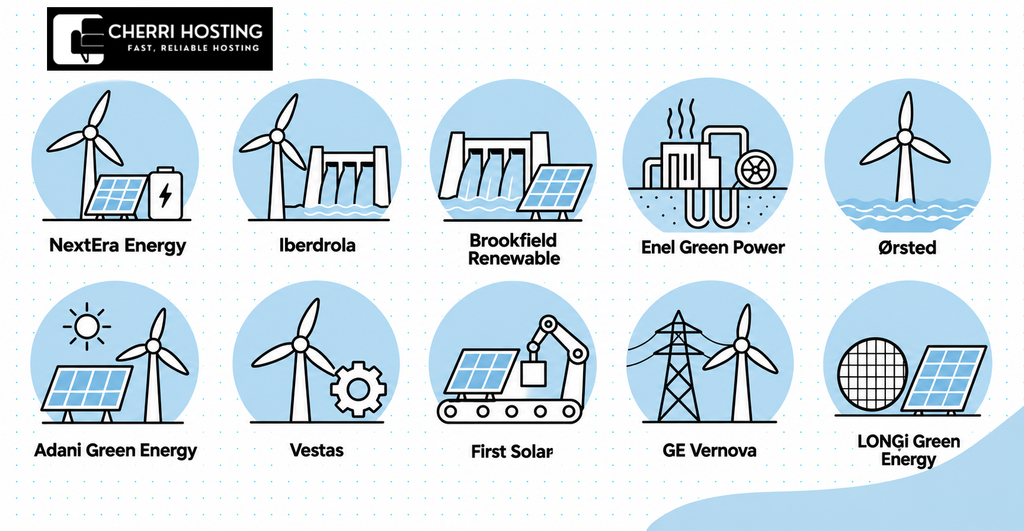
Renewable energy companies generally operate through two main business models. Power producers, such as NextEra Energy and Iberdrola, generate electricity and sell it to customers. Equipment manufacturers, such as Vestas and First Solar, supply technology used in renewable power projects.
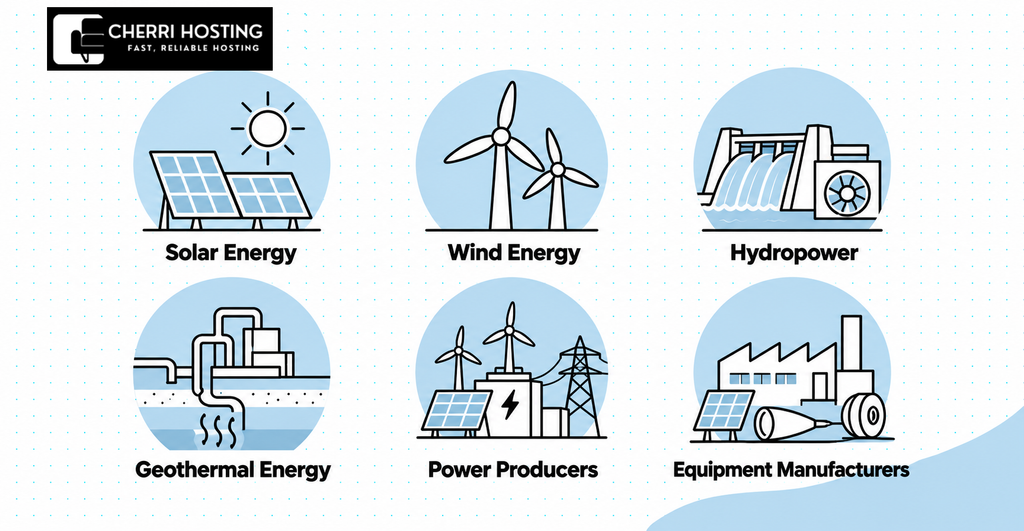
The four major renewable energy sources include:
- Solar energy: Solar panels convert sunlight into electricity.
- Wind energy: Wind turbines capture moving air to generate electricity.
- Hydropower: Hydroelectric plants use flowing or falling water to generate power.
- Geothermal energy: Geothermal plants use underground heat to produce electricity.
Renewable energy is becoming an increasingly important part of global electricity infrastructure. According to IRENA’s Renewable Capacity Statistics 2026, global renewable power capacity reached 5,149 gigawatts (GW) in 2025. The world added 692 GW of renewable capacity during that year.
How We Selected the Top Renewable Energy Companies
We selected these ten companies based on renewable energy scale, business activity, global presence, and technological importance. The selection includes electricity producers and equipment manufacturers to show different parts of the industry. It is an editorial comparison, not a mathematical ranking by one financial or operational measure.
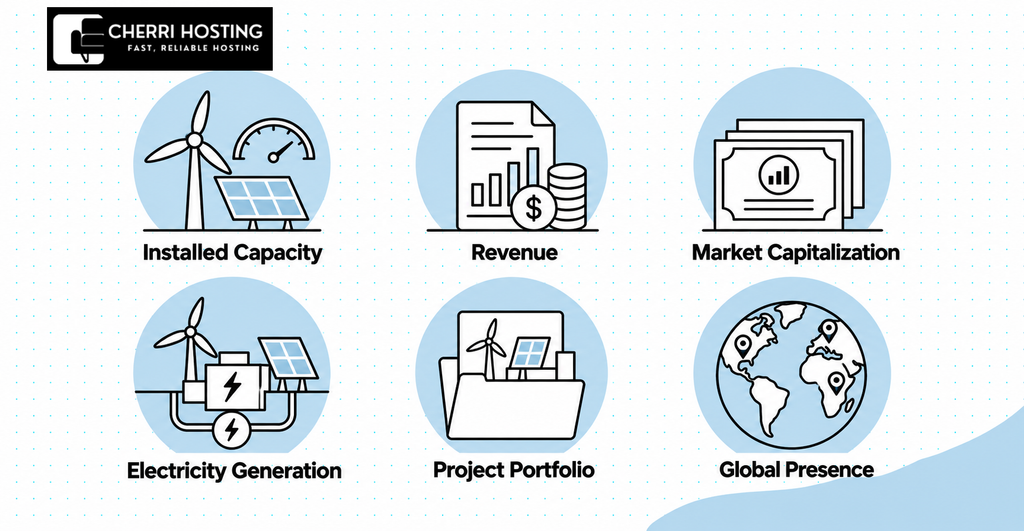
Installed Renewable Energy Capacity
Installed capacity measures the maximum power a generation facility can produce under specified conditions. It is measured in megawatts (MW) or gigawatts (GW). One gigawatt equals 1,000 megawatts.
Companies such as Iberdrola and Brookfield Renewable report substantial operating generation capacity. However, installed capacity differs from actual electricity output, which depends on operating conditions. Wind availability, sunlight, maintenance, and water supply influence how much electricity a facility generates.
Revenue and Market Capitalization
Annual revenue shows how much income a company earns from its business activities. Market capitalization measures the market value of a publicly traded company’s outstanding shares. Neither figure alone establishes renewable energy leadership.
Electricity Generation and Project Portfolios
Actual electricity generation is measured in units such as gigawatt-hours (GWh) and terawatt-hours (TWh). Project portfolios also reveal which technologies a company operates and where those facilities are located. We distinguish operating assets from proposed projects and equipment shipments.
Global Presence and Business Growth
International operations demonstrate a company’s ability to work across different electricity markets. We also considered reported expansion, technology development, and ongoing project investment. These factors provide useful context but do not guarantee future financial success.
Top Renewable Energy Companies at a Glance
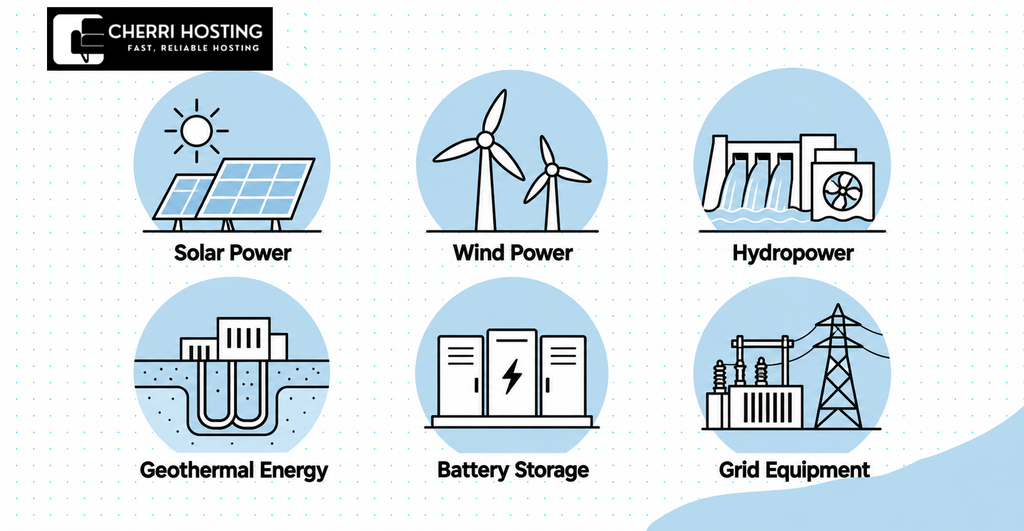
The following ten companies represent major renewable electricity producers, developers, and equipment manufacturers in 2026. Their activities cover solar, wind, hydropower, geothermal energy, battery storage, and electricity infrastructure. The comparison uses available 2025 financial-year figures, alongside selected disclosures published during 2026.
| Company | Headquarters | Main Specialization | Business Model | Reported Performance |
| NextEra Energy | USA | Wind, solar, storage | Electricity producer and developer | 40.6 GW operated wind and solar capacity, 2025 |
| Iberdrola | Spain | Wind, hydro, solar | Electric utility | Over 46 GW renewable capacity, 2025 |
| Brookfield Renewable | Bermuda / Canada | Hydro, wind, solar | Renewable power owner and operator | 47.2 GW operating portfolio capacity, 2025 |
| Enel Green Power / Enel | Italy | Hydro, solar, wind, geothermal | Electricity producer and developer | 61.9 GW consolidated renewable capacity, 2025 |
| Ørsted | Denmark | Offshore wind | Renewable power developer | 18.5 GW installed renewable capacity, 2025 |
| Adani Green Energy | India | Solar, wind, hybrid | Renewable power producer | 19.3 GW operating portfolio, March 2026 |
| Vestas | Denmark | Wind turbines | Equipment manufacturer | 201 GW cumulative turbine installations, 2025 |
| First Solar | USA | Thin-film solar panels | Equipment manufacturer | 17.5 GW solar modules sold, 2025 |
| GE Vernova | USA | Wind and grid equipment | Energy technology manufacturer | Approximately 59,000 installed wind turbines, 2025 |
| LONGi Green Energy | China | Solar panels and wafers | Equipment manufacturer | 86.58 GW solar module shipments, 2025 |
Important: These figures use different measurement methods and should not be directly compared as one ranking. NextEra’s figure includes operated wind and solar capacity, while Brookfield reports total portfolio capacity. Manufacturer figures describe equipment supplied or installed, not power plants owned by those manufacturers.
For example, Vestas supplies wind turbines that other companies may own and operate. First Solar manufactures solar modules rather than generating electricity from every module it sells. Understanding this difference helps prevent misleading conclusions.
Top 10 Renewable Energy Companies in the World
1. NextEra Energy – Major U.S. Renewable Energy Producer
Headquarters: Juno Beach, Florida, USA
Main Technologies: Solar, wind, battery storage
Business Type: Electricity producer and developer
NextEra Energy is one of the largest renewable electricity businesses in the United States. It operates through Florida Power & Light and NextEra Energy Resources. Its wider electricity business also includes conventional generation, so not all company capacity is renewable.
NextEra Energy Resources develops and operates solar farms, wind facilities, and battery storage projects. Its renewable generation serves electricity markets across the United States and parts of Canada. Battery storage helps deliver stored electricity when renewable generation is unavailable or insufficient.
According to NextEra’s 2025 annual filing, Energy Resources operated approximately 27.9 GW of wind and 12.8 GW of solar capacity. These figures total approximately 40.6 GW, including certain joint venture and noncontrolling interests. They do not represent the company’s entire electricity-generation portfolio.
NextEra also reported approximately 29.8 GW of projects in its development backlog in January 2026. The backlog includes wind, solar, and energy storage projects with future delivery expectations. These projects should not be counted as fully operating capacity.
Key strength: NextEra combines large renewable generation operations with battery storage development and long-term electricity agreements. Its established operations and development activity make it an important U.S. renewable energy company. However, the company’s broader business includes nuclear and natural gas generation.
2. Iberdrola – Global Wind and Hydropower Leader
Headquarters: Bilbao, Spain
Main Technologies: Wind, hydropower, solar
Business Type: Electricity utility and renewable developer
Iberdrola is a major international electricity company with extensive renewable power operations. The Spanish utility develops, owns, and operates renewable power facilities. Its electricity network business also distributes power to customers.
Iberdrola operates in countries including Spain, the United Kingdom, the United States, and Brazil. Its renewable portfolio includes onshore wind, offshore wind, hydropower, and solar electricity. The company also operates pumped hydropower and battery storage facilities.
According to Iberdrola’s official generation data, the company operated over 46 GW of renewable capacity at the end of 2025. Its renewable facilities generated more than 88,000 GWh of electricity that year. This output provides a more complete picture than installed capacity alone.
Iberdrola added more than 2.7 GW of renewable capacity during 2025. Its investments include offshore wind development and electricity storage infrastructure. The company operates renewable generation alongside regulated electricity networks.
Key strength: Iberdrola combines large renewable power assets with established international electricity infrastructure. Its diversified mix includes wind, solar, and hydropower. This provides multiple generation sources rather than dependence on one technology.
3. Brookfield Renewable – Diversified Renewable Power Company
Headquarters: Hamilton, Bermuda; major management operations in Canada
Main Technologies: Hydropower, wind, solar, storage
Business Type: Renewable power owner, operator, and developer
Brookfield Renewable owns and operates a diversified renewable energy portfolio across international markets. Its operations include hydropower stations, wind farms, solar facilities, and battery storage. It also invests in renewable power infrastructure and development projects.
Brookfield operates in North America, South America, Europe, and Asia-Pacific. Its hydropower business is an important part of its generation portfolio. The company also develops wind and solar projects to expand its electricity supply.
According to Brookfield Renewable’s 2025 annual filing, it reported 47,203 MW of portfolio capacity. That equals approximately 47.2 GW. The same report recorded approximately $6.4 billion in annual revenue.
Brookfield also maintains a substantial renewable development pipeline. Proposed projects offer opportunities for future expansion, but their completion is not guaranteed. Financing, permits, electricity contracts, and construction schedules affect project delivery.
Key strength: Brookfield combines hydroelectric generation with wind, solar, and other power investments. Its international portfolio provides exposure to different technologies and electricity markets. However, investors should distinguish total portfolio capacity from Brookfield’s proportionate ownership.
4. Enel Green Power – International Renewable Energy Developer
Headquarters: Rome, Italy
Main Technologies: Hydropower, wind, solar, geothermal
Business Type: Renewable power developer and operator
Enel Green Power is the renewable energy business of Italy’s Enel Group. It develops and operates renewable electricity projects across several international markets. Its portfolio includes hydropower, solar, wind, and geothermal generation.
The broader Enel Group operates electricity businesses across Europe and the Americas. Its renewable operations support electricity generation and energy storage development. Enel also manages electricity distribution networks and serves retail customers.
According to Enel’s 2025 Integrated Annual Report, consolidated renewable capacity reached 61.9 GW. This figure includes battery storage capacity under Enel’s reporting definition. The company generated 128.06 TWh of consolidated renewable electricity during 2025.
Enel separately reported approximately 5.8 GW of capacity through joint ventures and stewardship arrangements. Combining these categories produces approximately 68 GW of managed renewable capacity. These different reporting categories explain why Enel capacity figures vary between sources.
Key strength: Enel operates across four major renewable electricity technologies. Its hydropower and geothermal operations provide alternatives to weather-dependent wind and solar generation. Its worldwide electricity business also supports investment in renewable infrastructure.
5. Ørsted – Offshore Wind Energy Specialist
Headquarters: Fredericia, Denmark
Main Technologies: Offshore wind, onshore wind, solar
Business Type: Renewable power developer and operator
Ørsted is a Danish renewable energy company specializing in offshore wind power. It develops large wind farms in coastal waters. Its operations also include onshore wind, solar generation, and battery storage.
The company has developed renewable projects in Denmark, the United Kingdom, Germany, Taiwan, and the United States. Offshore wind development requires specialized engineering, marine construction, and electricity transmission connections. These projects can generate significant electricity but involve substantial development costs.
According to Ørsted’s 2025 annual reporting, the company recorded approximately 18.5 GW of installed renewable capacity. Offshore wind contributed approximately 10.2 GW. The remaining reported capacity included onshore generation, storage, and bioenergy.
Ørsted also reported approximately 8.9 GW of renewable capacity with final investment decisions. Such projects are approved for development but are not necessarily generating electricity. Their completion depends on construction progress and commercial conditions.
Key strength: Ørsted has extensive experience developing offshore wind farms. Its business demonstrates the opportunities and financial risks associated with large offshore projects. Project delays, financing costs, and construction challenges remain important considerations.
6. Adani Green Energy – Major Renewable Energy Producer in India
Headquarters: Ahmedabad, Gujarat, India
Main Technologies: Solar, wind, hybrid renewable power
Business Type: Renewable power producer and developer
Adani Green Energy is a major Indian renewable electricity producer focused on large-scale projects. It develops and operates solar farms, wind facilities, and hybrid renewable power plants. Hybrid projects combine technologies such as solar and wind within connected generation systems.
The company operates across India and is developing significant capacity in Gujarat and Rajasthan. Its Khavda project in Gujarat is a major part of its expansion strategy. The development combines renewable generation with planned energy storage infrastructure.
According to Adani Green Energy’s April 2026 announcement, its operational renewable portfolio reached 19.3 GW. The company added approximately 5.1 GW during India’s 2025–2026 financial year. Additions included solar, wind, and combined wind-solar capacity.
Adani Green Energy has also identified a 50 GW capacity target for 2030. This target describes future ambitions rather than existing installed capacity. Achieving it depends on financing, construction, grid access, and regulatory conditions.
Key strength: Adani Green Energy focuses on large-scale renewable electricity development within India’s growing energy market. Its solar and wind projects contribute to domestic renewable capacity expansion. Its performance also depends on delivering major projects as planned.
7. Vestas – Global Wind Turbine Manufacturer
Headquarters: Aarhus, Denmark
Main Technology: Onshore and offshore wind
Business Type: Wind turbine manufacturer and service provider
Vestas is a Danish company that designs, manufactures, installs, and services wind turbines. It supplies equipment used in renewable electricity generation worldwide. Unlike electricity producers, its main business is selling and maintaining wind technology.
Vestas operates across wind energy markets in Europe, the Americas, and Asia-Pacific. Its turbine designs are used in land-based and offshore wind projects. The company also provides maintenance services throughout turbine operating lifetimes.
According to Vestas’ 2025 Annual Report, the company reached 201 GW of cumulative installed wind turbine capacity. These installations were distributed across 88 countries. The figure represents turbines supplied and installed over time, not power generation assets owned by Vestas.
During 2025, Vestas delivered approximately 14.5 GW of wind turbines to customers. Its wind turbine order backlog reached approximately 31 GW at year-end. Future delivery depends on manufacturing schedules, project construction, and customer requirements.
Key strength: Vestas specializes in wind turbine engineering, manufacturing, and long-term maintenance. Its global installation history demonstrates extensive experience across wind markets. Manufacturing performance remains sensitive to supply costs and customer investment decisions.
8. First Solar – Leading U.S. Solar Technology Manufacturer
Headquarters: Tempe, Arizona, USA
Main Technology: Thin-film solar photovoltaic modules
Business Type: Solar equipment manufacturer
First Solar is a U.S. company specializing in thin-film solar panel manufacturing. Its modules convert sunlight into electricity using semiconductor technology. The company primarily supplies utility-scale solar development rather than operating a comparable global electricity-generation portfolio.
First Solar uses cadmium telluride technology instead of conventional crystalline silicon solar cells. Its manufacturing approach differs from companies producing silicon-based solar panels. Product performance depends on factors including temperature, installation conditions, and system design.
According to First Solar’s 2025 Annual Report, the company sold 17.5 GW of solar modules in 2025. Annual net sales reached approximately $5.2 billion. That represented a 24% increase from 2024.
First Solar continues investing in manufacturing capacity and solar technology development. Its business depends on solar project demand, manufacturing efficiency, and trade policy. Equipment sales should not be confused with installed generation capacity owned by the company.
Key strength: First Solar specializes in a distinct solar manufacturing technology. Its U.S. manufacturing presence and utility-scale customer focus distinguish it from many competitors. Its financial performance depends partly on policy conditions and manufacturing demand.
9. GE Vernova – Wind and Electricity Grid Technology Provider
Headquarters: Cambridge, Massachusetts, USA
Main Technologies: Wind turbines, grid equipment, electricity technology
Business Type: Energy equipment and technology manufacturer
GE Vernova supplies wind power equipment and electricity infrastructure technology for global energy markets. Its wind business includes onshore and offshore turbine technology. The wider company also manufactures conventional power equipment and grid-related products.
GE Vernova operates through Power, Wind, and Electrification business segments. Its wind division supplies equipment that electricity developers use in renewable energy projects. The Electrification segment supports grid infrastructure needed to deliver electricity.
According to GE Vernova’s 2025 Annual Report, the company had approximately 59,000 wind turbines installed worldwide. This figure represents its installed equipment fleet, not company-owned renewable generation capacity. The group reported approximately $38.1 billion in total revenue for 2025.
GE Vernova’s business extends beyond renewable energy into gas turbines and other electricity technologies. Therefore, total company revenue does not represent wind energy revenue alone. The company also supports electrical systems used by renewable and conventional power generators.
Key strength: GE Vernova connects wind turbine manufacturing with electricity grid technology. Its equipment supports electricity generation, transmission, and system modernization. Its broad energy business means renewable activities must be evaluated separately.
10. LONGi Green Energy – Global Solar Equipment Manufacturer
Headquarters: Xi’an, Shaanxi, China
Main Technologies: Solar photovoltaic wafers, cells, and modules
Business Type: Solar equipment manufacturer
LONGi Green Energy is a Chinese manufacturer specializing in solar photovoltaic technology. Its products include silicon wafers, solar cells, and photovoltaic modules. These components are used in residential, commercial, and utility-scale solar systems.
LONGi manufactures crystalline silicon products used throughout the solar supply chain. Its research includes high-efficiency back-contact solar cell technology. Improving conversion efficiency helps solar modules produce more power within a given surface area.
According to LONGi’s 2025 annual results, solar module shipments reached 86.58 GW in 2025. Silicon wafer shipments totaled 111.56 GW during the same year. These are manufacturing shipment figures rather than electricity-generation capacity owned by LONGi.
The company reported annual operating revenue of approximately 70.35 billion Chinese yuan. LONGi also recorded a net loss in 2025 despite improvements in its cost structure. This illustrates how manufacturing scale does not automatically guarantee profitability.
Key strength: LONGi focuses on high-volume solar manufacturing and technology development. Its products support solar electricity deployment across global markets. Its results also reflect pricing pressure and competition within the solar manufacturing industry.The top renewable energy companies include global electricity producers alongside major solar and wind equipment manufacturers. Each company contributes differently through power generation, project development, manufacturing, or electrical infrastructure. The following profiles explain their strengths, technologies, and reported performance.
Which Renewable Energy Companies Lead by Technology?
Different renewable energy companies lead in different technologies because their business models and operating portfolios vary. A wind equipment manufacturer cannot be compared directly with a hydroelectric electricity producer. Technology-specific comparisons help readers identify relevant companies more accurately.
| Energy Technology | Notable Companies | Main Activities |
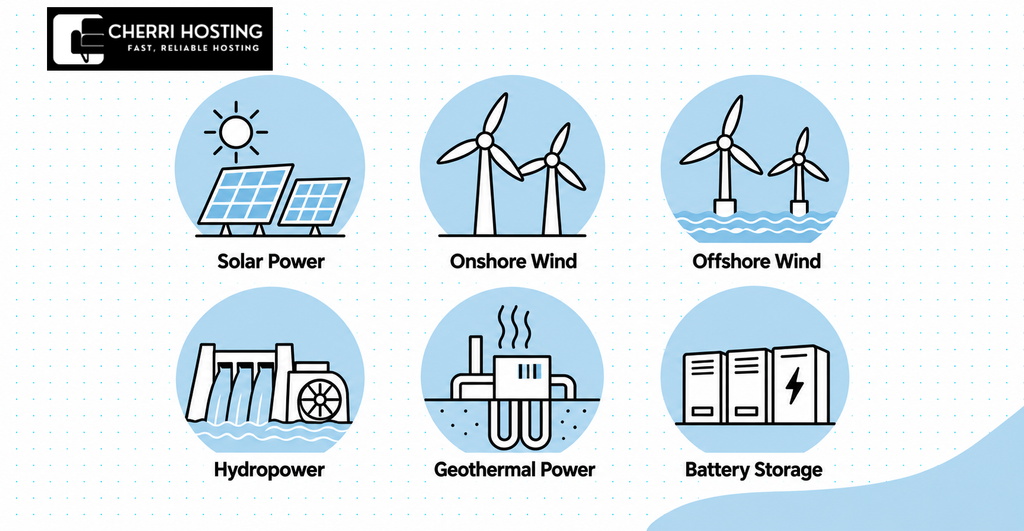
| Solar power | First Solar, LONGi, Adani Green Energy | Manufacturing and solar electricity development |
| Onshore wind | Vestas, NextEra Energy, Iberdrola | Turbine manufacturing and wind generation |
| Offshore wind | Ørsted, Iberdrola, Vestas | Project development, operation, and equipment |
| Hydropower | Brookfield Renewable, Iberdrola, Enel | Hydroelectric generation and storage |
| Geothermal power | Enel Green Power | Geothermal electricity production |
| Battery storage | NextEra Energy, Enel, Adani Green Energy | Storage development and electricity integration |
Solar Energy Companies
Solar businesses include equipment manufacturers, project developers, and electricity producers. First Solar and LONGi manufacture photovoltaic technology, while Adani Green Energy develops solar power facilities. Their results should be measured using different indicators.
Wind Energy Companies
Wind businesses include turbine manufacturers such as Vestas and electricity developers such as Ørsted. NextEra Energy and Iberdrola also operate substantial wind generation capacity. Offshore projects typically require more complex marine construction than land-based wind farms.
Hydropower and Geothermal Companies
Brookfield Renewable, Iberdrola, and Enel operate hydroelectric generation facilities. Enel also develops and operates geothermal electricity production. These technologies can provide different generation characteristics from solar and wind electricity.
Leading Renewable Energy Companies by Region
Renewable energy leadership differs across regions because electricity demand, natural resources, and government policies vary. The United States has major developers and equipment manufacturers. Europe and Asia also host internationally important renewable businesses.
| Region | Notable Companies | Main Strength |
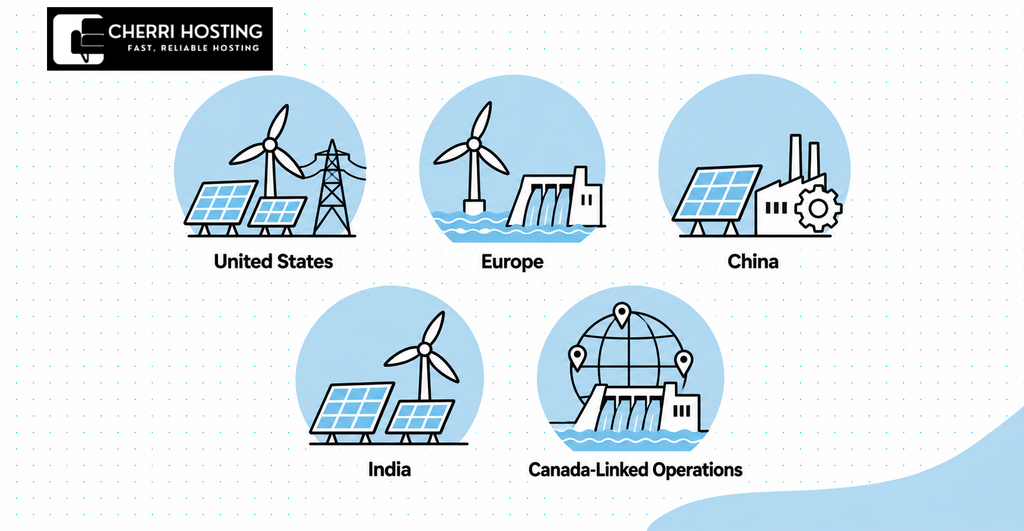
| United States | NextEra Energy, First Solar, GE Vernova | Renewable generation, solar manufacturing, grid technology |
| Europe | Iberdrola, Ørsted, Vestas, Enel | Wind, hydro, electricity utilities, offshore development |
| China | LONGi Green Energy | Solar manufacturing and photovoltaic technology |
| India | Adani Green Energy | Utility-scale solar, wind, and hybrid projects |
| Canada-linked global operations | Brookfield Renewable | International renewable power ownership and investment |
The regional picture also extends beyond company headquarters. For example, Iberdrola operates internationally despite being headquartered in Spain. Brookfield Renewable owns facilities across multiple continents, while Vestas supplies equipment worldwide.
Country-specific rankings need separate criteria and national market data. The largest U.S. renewable generator may not be the largest solar manufacturer. Likewise, global electricity capacity rankings differ from regional equipment sales rankings.
Financial Performance and Investment Potential
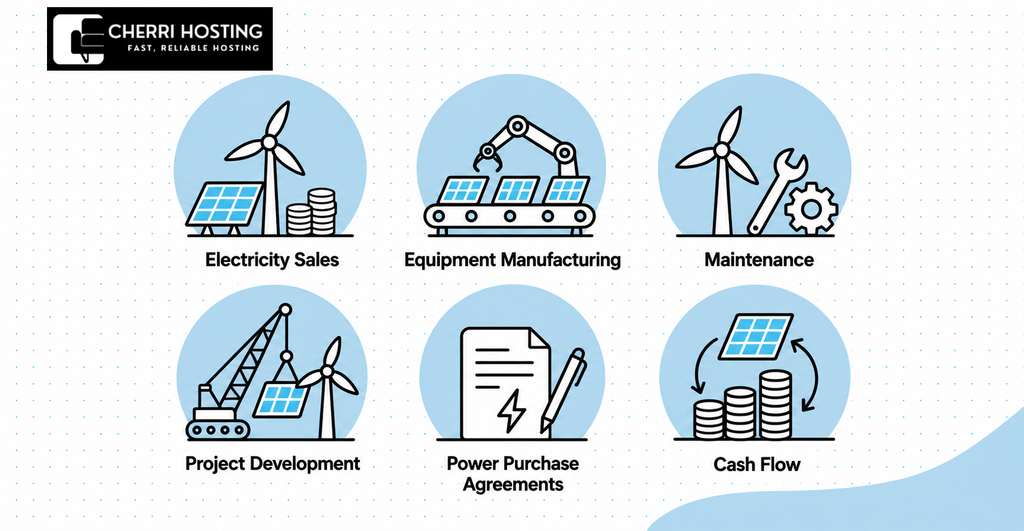
Renewable energy companies earn money through electricity sales, equipment manufacturing, maintenance, and project development. Their financial performance depends on business type, financing costs, and market conditions. A large operating portfolio does not automatically produce the highest profit.
Electricity producers often sell power through long-term contracts called power purchase agreements (PPAs). These agreements establish commercial terms between electricity suppliers and buyers. Equipment manufacturers earn revenue from product sales and services rather than owning every completed power project.
The following examples show how financial results differ among renewable energy businesses.
| Company | Reported 2025 Financial Metric | What It Shows |
| Brookfield Renewable | $6.4 billion revenue | Scale of reported business operations |
| First Solar | $5.2 billion net sales | Solar manufacturing sales |
| GE Vernova | $38.1 billion total revenue | Diversified energy technology business |
| LONGi Green Energy | CNY 70.35 billion revenue | Solar manufacturing scale |
| Vestas | €15.05 billion Power Solutions revenue | Wind equipment business activity |
These figures are reported in different currencies and cover different business activities. GE Vernova’s total revenue includes non-renewable electricity technologies. Therefore, the table should not be interpreted as a direct ranking of renewable energy profitability.
Investors should also review debt, cash flow, operating margins, and long-term project commitments. Interest expenses can substantially affect businesses financing large renewable power plants. Publicly traded companies also face changing market valuations, even when electricity demand increases.
Investment takeaway: A company’s renewable energy capacity and financial strength are separate measures. Compare similar business models before making financial judgments. Renewable energy stocks can experience substantial losses despite long-term industry growth.
Challenges Facing Renewable Energy Companies
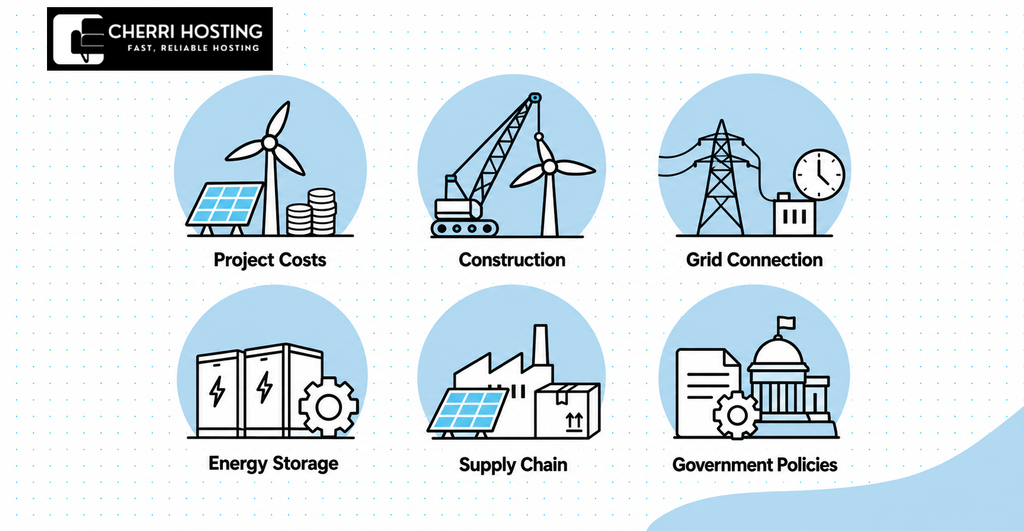
Renewable energy companies face financing, construction, grid connection, and regulatory challenges. These problems can delay projects or increase operating costs. Even established businesses must manage uncertainty when expanding renewable generation.
High Project Development Costs
Large solar farms, offshore wind projects, and hydroelectric facilities require substantial initial investment. Developers must pay for equipment, construction, land access, and electrical infrastructure. Higher interest rates can increase borrowing costs and reduce expected project returns.
Grid Connection and Energy Storage
Renewable projects need electricity network capacity before delivering power to customers. Limited transmission infrastructure can delay connections or restrict electricity delivery. Battery storage can improve flexibility, but it introduces additional costs and operating requirements.
Manufacturing and Supply Chain Risks
Equipment manufacturers depend on materials such as steel, copper, silicon, and specialized components. Trade restrictions, manufacturing costs, and changing demand can affect profit margins. The solar industry also faces pricing pressure when production capacity exceeds market demand.
Changing Government Policies
Renewable projects may benefit from tax incentives, public support, or renewable electricity requirements. Policy changes can affect future project economics and investment decisions. Companies operating internationally must also follow different national regulations.
Future of Renewable Energy Companies
The future of renewable energy companies depends on electricity demand, technology improvements, infrastructure investment, and project economics. Solar, wind, hydropower, and storage will continue competing for new investment. However, growth opportunities will differ by technology and geographic market.
IRENA reported 692 GW of renewable capacity additions during 2025, increasing global capacity to 5,149 GW. This provides evidence of recent renewable electricity expansion. Future annual growth will still depend on financing, government policy, and project delivery.
Several developments are particularly relevant to renewable energy companies.
Battery Energy Storage
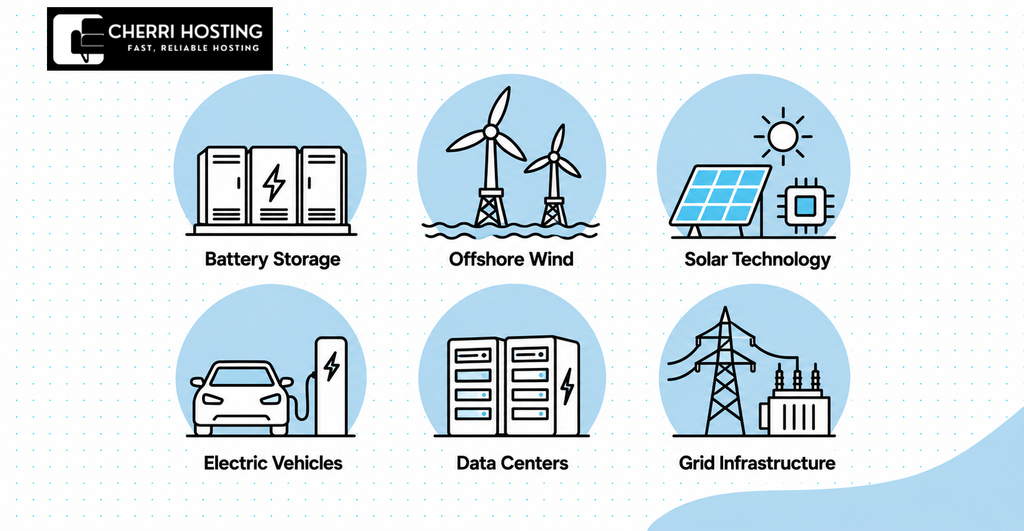
Battery storage allows electricity produced earlier to be used when needed. Companies such as NextEra Energy, Enel, and Adani Green Energy are developing storage alongside generation projects. Battery economics depend on installation costs, electricity prices, and operating conditions.
Offshore Wind Development
Offshore wind offers access to substantial wind resources near coastal electricity markets. Developers such as Ørsted and Iberdrola have experience constructing large marine wind facilities. However, construction complexity and financing costs remain significant challenges.
Solar Technology Improvements
Solar manufacturers continue developing modules that convert sunlight into electricity more efficiently. LONGi and First Solar use different photovoltaic technologies and manufacturing approaches. Improvements in efficiency and production costs can influence future competitiveness.
Rising Electricity Demand
Electric vehicles, industrial electrification, and data centers can increase electricity demand. Renewable developers may supply part of this demand through new generation projects. Grid investment and reliable electricity supply remain essential for supporting expansion.
How to Compare Renewable Energy Companies
The best way to compare renewable energy companies is to evaluate similar businesses using consistent performance measures. Begin by identifying whether the company generates electricity, develops projects, or manufactures equipment. Then examine its operating scale, financial position, and reported growth.
Use these five evaluation factors:
- Business model: Determine whether the company produces electricity or supplies equipment.
- Operational scale: Compare installed renewable capacity or equipment sales using matching definitions.
- Financial health: Examine revenue, profitability, debt, and cash flow.
- Growth potential: Review projects under construction and realistic expansion plans.
- Business risks: Consider financing costs, regulations, construction delays, and market competition.
A company’s development pipeline should not be treated as completed operating capacity. Similarly, solar module shipments do not equal electricity generation owned by the manufacturer. These distinctions make company comparisons more accurate and useful.
Frequently Asked Questions
Which Is the Largest Renewable Energy Company in the World?
The answer depends on whether size means managed capacity, operating generation, revenue, or market capitalization. Enel reported approximately 68 GW of managed renewable capacity at the end of 2025. However, different ownership definitions and business models make universal rankings difficult.
Which Company Is a Major Renewable Energy Leader in the United States?
NextEra Energy is a major U.S. renewable electricity producer and developer. Its Energy Resources business operated approximately 40.6 GW of wind and solar capacity at year-end 2025. The company also develops battery storage and other electricity infrastructure.
What Is the Difference Between Solar Manufacturers and Renewable Power Producers?
Solar manufacturers produce equipment, while renewable power producers generate and sell electricity. For example, First Solar manufactures photovoltaic modules, while Adani Green Energy operates solar power facilities. Their business performance requires different comparison measures.
Are Renewable Energy Companies Profitable?
Some renewable energy companies are profitable, while others report losses during particular financial periods. Profitability depends on electricity contracts, equipment prices, operating costs, and financing. Company financial statements provide more reliable answers than industry-wide assumptions.
Are Renewable Energy Companies Good Long-Term Investments?
Renewable energy companies may offer growth opportunities, but investment returns are not guaranteed. Revenue growth, financial strength, company valuation, and industry risks all affect potential returns. Investors should review individual financial statements before choosing stocks.
Which Renewable Energy Technology Has the Most Global Capacity?
Solar power has become the largest renewable technology by installed global generating capacity. Hydropower and wind also contribute substantial electricity generation worldwide. Technology rankings can differ when comparing installed capacity with actual annual electricity output.
Which Renewable Energy Companies Specialize in Wind Power?
Vestas and Ørsted are important companies within the global wind industry. Vestas manufactures wind turbines, while Ørsted develops and operates wind farms. Iberdrola and NextEra Energy also maintain substantial wind generation portfolios.
Conclusion
The top renewable energy companies in 2026 represent different strengths across generation, development, manufacturing, and technology. NextEra Energy, Iberdrola, Brookfield Renewable, Enel, and Ørsted demonstrate major renewable generation activities. Adani Green Energy, Vestas, First Solar, GE Vernova, and LONGi highlight additional development and manufacturing capabilities.
The most useful comparison depends on what readers want to measure. Operating capacity, financial performance, geographic reach, and technology specialization all provide different insights. Understanding these differences makes renewable energy company rankings more meaningful and reliable.