Hydraulic Top Link: 5 Steps to Choosing the Right One
Tired of adjusting your tractor’s top link by hand every time you change attachments? Manual adjustments take time, especially when your equipment needs frequent angle changes. Buying the wrong replacement can create even more problems with fit and performance.
A hydraulic top link makes adjustments easier by using your tractor’s hydraulic power. However, not every model fits every tractor or attachment. Wrong measurements, mounting pins, or hydraulic connections can leave you with an unusable part.
Choosing the right one doesn’t have to be complicated. This guide explains five simple steps to find a hydraulic top link that fits. You’ll learn about hitch categories, correct measurements, hydraulic requirements, features, and common buying mistakes.
What Is a Hydraulic Top Link?
A hydraulic top link is an adjustable hydraulic cylinder connecting a tractor to an implement through its three-point hitch. It replaces the manual top link, allowing operators to change an attachment’s forward or backward angle. Instead of turning a threaded rod, the operator uses the tractor’s hydraulic control.
A three-point hitch has three connection points: two lower links and one upper top link. The hydraulic top link connects the tractor’s upper mounting point to equipment such as a box blade or rear blade. Changing its length adjusts the implement’s pitch, affecting how the attachment contacts the ground.
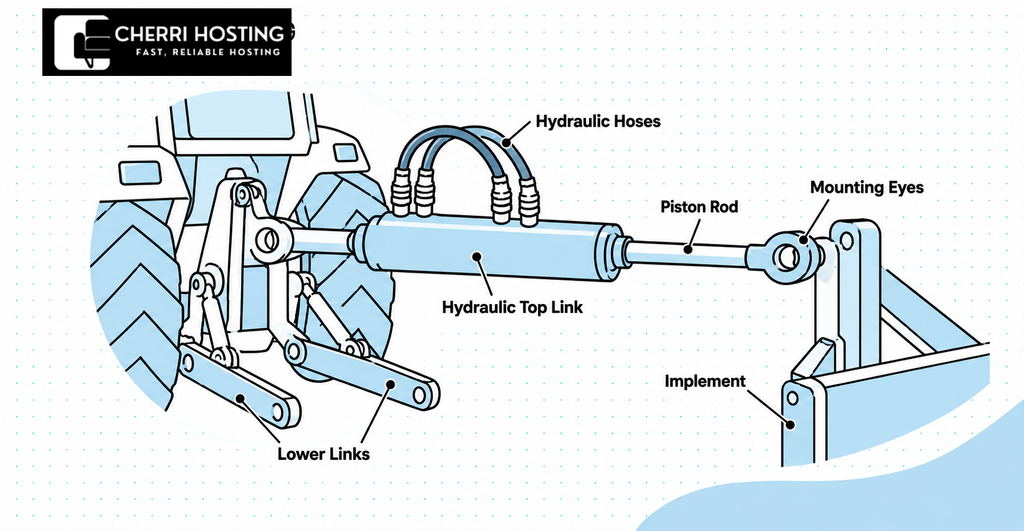
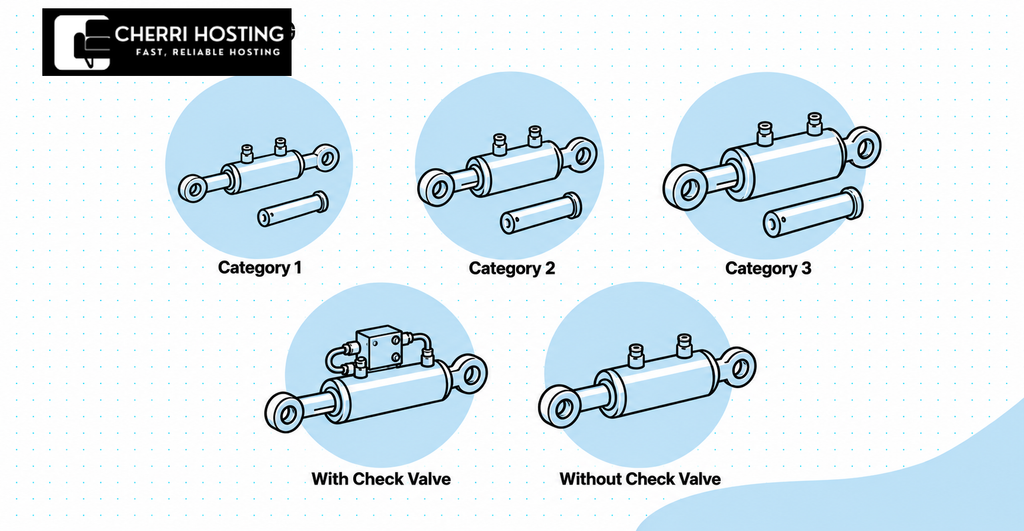
Hydraulic top links come in hitch categories such as Category 1, Category 2, and Category 3. Category 1 typically uses a 19 mm upper link pin, while Category 2 uses approximately 25 mm. According to the Olsson Parts top link guide, these measurements help determine compatibility.
The main advantage is adjusting an attachment without repeatedly leaving the tractor seat. This is useful during grading, leveling, and frequent implement changes. However, the correct hydraulic top link must match the tractor’s hitch, hydraulic system, and working requirements.
How Does a Hydraulic Top Link Work?
A hydraulic top link works by using pressurized oil to extend or retract a cylinder. This movement changes the distance between the tractor and its attached implement. The operator controls the movement through a suitable hydraulic valve.
Main Components of a Hydraulic Top Link
A hydraulic top link uses a cylinder, piston, piston rod, and mounting ends. External equipment includes hydraulic hoses, fittings, and a control valve. Each component performs a specific function during adjustment.
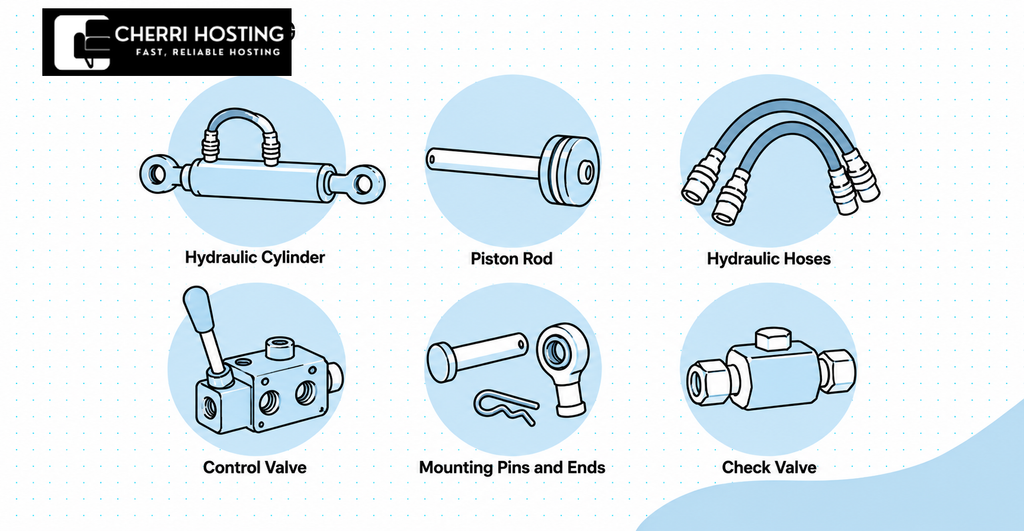
- Hydraulic cylinder: Contains the piston and pressurized hydraulic oil.
- Piston rod: Moves outward or inward to adjust the link’s length.
- Hydraulic hoses: Carry oil between the cylinder and tractor.
- Control valve: Directs hydraulic flow to control movement.
- Mounting pins and ends: Secure the link to the tractor and implement.
- Check valve: Helps prevent unwanted movement when included.
How Hydraulic Pressure Adjusts the Top Link
A double-acting cylinder uses hydraulic pressure to move its piston in both directions. When oil enters the extension chamber, the piston rod moves outward and lengthens the top link. Reversing the hydraulic flow retracts the rod and shortens the link.
For example, extending the link on a compatible box blade changes its cutting angle. Shortening the link changes the blade’s pitch in the opposite direction. The exact effect depends on implement geometry and the manufacturer’s adjustment instructions.
Hydraulic top link cylinders are available with different adjustment ranges. Summit Hydraulics, for example, lists Category 1 models with 6-inch, 8-inch, and 11-inch strokes. These measurements describe piston travel, not the cylinder’s complete length.
Benefits and Common Uses of a Hydraulic Top Link
A hydraulic top link reduces manual adjustment and provides convenient control over an implement’s working angle. It allows operators to change attachment pitch using the tractor’s hydraulic system. This is particularly useful when an implement requires frequent positioning changes.
Key Benefits for Tractor Owners
- Easier adjustment: Change implement pitch through a hydraulic control instead of turning a threaded link.
- Reduced manual effort: Avoid repeatedly stopping work to adjust the top link by hand.
- Better positioning control: Fine-tune an attachment’s working angle during suitable operations.
- Simpler attachment alignment: Change link length to help align upper mounting points.
- Flexible use: Operate compatible equipment such as box blades, rear blades, and landscape rakes.
Hydraulic adjustment does not automatically improve every tractor operation. Its value depends on the attachment, working conditions, and adjustment frequency. Correct setup remains essential for safe and effective operation.
Common Tractor Implements That Use Hydraulic Top Links
Box blades use top link adjustments to control how their cutting edges contact the ground. Operators can change blade pitch when grading driveways or moving loose soil. The correct setting depends on the desired surface finish and implement design.
Rear blades benefit from pitch adjustments during scraping, grading, and surface maintenance. Landscape rakes also use top link positioning to change tooth contact with the ground. Rotary cutters may require specific top link arrangements to maintain proper movement over uneven terrain.
Always follow the implement manufacturer’s instructions before replacing its original top link. Some implements require floating connections or special mounting arrangements. A rigid hydraulic cylinder may not suit every application.
Types of Hydraulic Top Links
Hydraulic top links are commonly classified by hitch category, cylinder size, and check-valve design. These differences affect mounting compatibility, adjustment range, and position holding. Understanding them helps prevent incorrect purchases.
Category 1, Category 2, and Category 3 Hydraulic Top Links
The three common hitch categories use different upper-link pin diameters. Category 1 generally serves compact agricultural equipment, while Categories 2 and 3 accommodate larger hitch arrangements. Tractor horsepower alone does not establish the correct category.
| Hitch category | Typical upper link pin diameter | Common application |
| Category 1 | 19 mm (¾ inch) | Compact tractors |
| Category 2 | 25.4 mm (1 inch) | Utility tractors |
| Category 3 | Approximately 32 mm (1¼ inch) | Larger agricultural tractors |
These measurements follow standard three-point hitch dimensions and are summarized in the Olsson Parts selection guide. Actual compatibility also depends on mounting width, end design, and cylinder length. Always measure the existing hitch rather than relying only on a category label.
Hydraulic Top Links With and Without Check Valves
A hydraulic top link with a pilot-operated check valve helps hold its position against unintended movement. The valve restricts oil flow until hydraulic pressure releases it. This feature is useful when consistent implement pitch is important.
A cylinder without an integrated check valve relies more directly on its hydraulic control circuit for position holding. Internal leakage can still cause movement under load. A check valve improves position retention but does not replace mechanical supports or safe hydraulic practices.
How to Choose the Right Hydraulic Top Link for Your Tractor
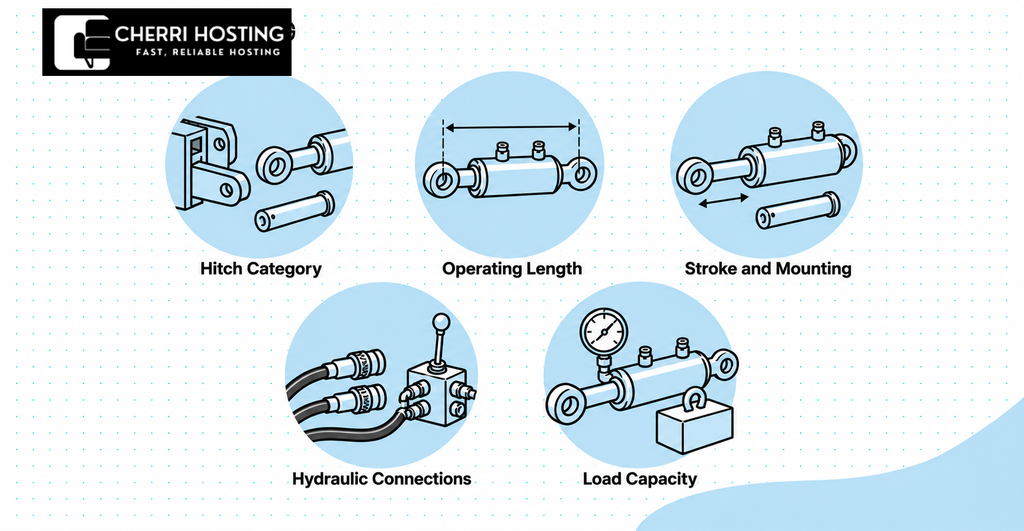
Choose a hydraulic top link by checking five factors: hitch category, operating length, stroke and mounting dimensions, hydraulic connections, and load capacity. Each factor affects whether the cylinder fits and works correctly. Follow these five steps before purchasing.
Check Your Tractor’s Hitch Category
Step 1: Identify your tractor’s hitch category. Check the operator’s manual and measure the existing upper mounting pin. The pin diameter should match the replacement cylinder’s mounting end.
Category 1 generally uses a 19 mm pin, while Category 2 uses 25.4 mm. Category 3 commonly uses an approximately 32 mm upper pin. Confirm both tractor-side and implement-side connections because their requirements may differ.
Measure Length, Stroke, and Pin Size
Step 2: Measure the required top link length. Measure from the center of the tractor-side pin to the center of the implement-side pin. Record the required length at normal operating positions.
Step 3: Check the cylinder’s stroke and mounting dimensions. Stroke is the difference between fully extended and fully retracted lengths. For example, an 18-inch minimum length and 26-inch maximum length provide an 8-inch adjustment range.
The chosen cylinder must cover the implement’s necessary operating positions without reaching its mechanical limits. Check pin diameter, ball-end width, and available mounting clearance. The cylinder must also articulate freely as the hitch rises and lowers.
Check Hydraulic Compatibility and Load Requirements
Step 4: Confirm your tractor’s hydraulic connections. A typical double-acting top link uses two hydraulic hoses connected to a suitable double-acting control valve. Check available rear remotes, fitting types, coupler compatibility, and hose length.
Step 5: Verify pressure ratings and working capacity. The cylinder must withstand the tractor’s hydraulic pressure and the forces created during operation. Check cylinder bore, rod diameter, rated pressure, and manufacturer specifications.
Never choose a hydraulic top link based on horsepower or hitch category alone. Verify the mounting dimensions and hydraulic requirements before ordering. Also confirm whether the package includes hoses, couplers, fittings, and mounting pins.
How to Install a Hydraulic Top Link
Installing a hydraulic top link involves replacing the manual link, securing the cylinder, and connecting its hydraulic hoses. The installation must follow both tractor and cylinder manufacturer instructions. Always lower the implement and secure it before removing the original link.
Tools and Hydraulic Connections Needed
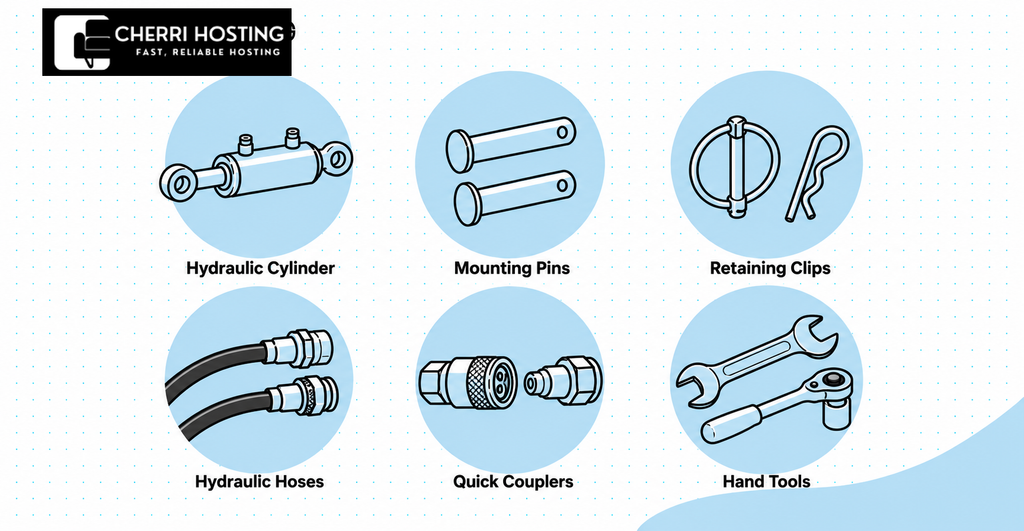
Prepare the correct mounting pins, retaining clips, compatible fittings, and suitable hand tools. A typical double-acting cylinder has two hydraulic ports requiring compatible hose connections. The tractor also needs an appropriate hydraulic control circuit.
Check whether the purchased kit includes the necessary hoses and couplers. For example, Summit Hydraulics offers certain Category 1 kits with 36-inch or 48-inch hose options. The correct length depends on the tractor’s outlet position and hitch movement.
Basic Installation and Adjustment Steps
Follow these six general installation steps after reviewing the manufacturer’s instructions. Never work beneath an unsupported implement or disconnect pressurized hydraulic connections. If the tractor lacks suitable hydraulic controls, have a qualified technician assess the required modifications.
- Park safely: Use level ground, lower the implement, stop the engine, and release hydraulic pressure.
- Remove the manual link: Support the implement and remove the existing upper link pins.
- Install the cylinder: Align the mounting ends and secure the correct pins and retaining clips.
- Connect the hoses: Attach compatible hoses to the cylinder and appropriate hydraulic outlets.
- Check clearance: Keep hoses away from tires, lift arms, sharp edges, and the PTO shaft.
- Test movement: Operate the cylinder slowly and inspect the complete working range.
After installation, verify that the cylinder does not bind or contact surrounding equipment. Check hose clearance while raising and lowering the hitch under safe conditions. Confirm that the implement reaches its required positions without exceeding cylinder travel.
Hydraulic Top Link vs. Manual Top Link: Which Is Better?
A hydraulic top link suits frequent adjustments, while a manual top link is generally more economical for occasional use. Both change the implement’s pitch through the three-point hitch. Their main differences involve adjustment method, cost, maintenance, and hydraulic requirements.
| Feature | Hydraulic top link | Manual top link |
| Adjustment | Hydraulic valve control | Hand-operated threaded mechanism |
| Operator convenience | Usually adjustable from the tractor seat | Usually requires manual adjustment |
| Purchase cost | Generally higher | Generally lower |
| Maintenance | Hoses, seals, joints, and fittings | Threads, lubrication, and joints |
| Hydraulic supply | Required | Not required |
| Suitable use | Frequent angle changes | Infrequent angle changes |
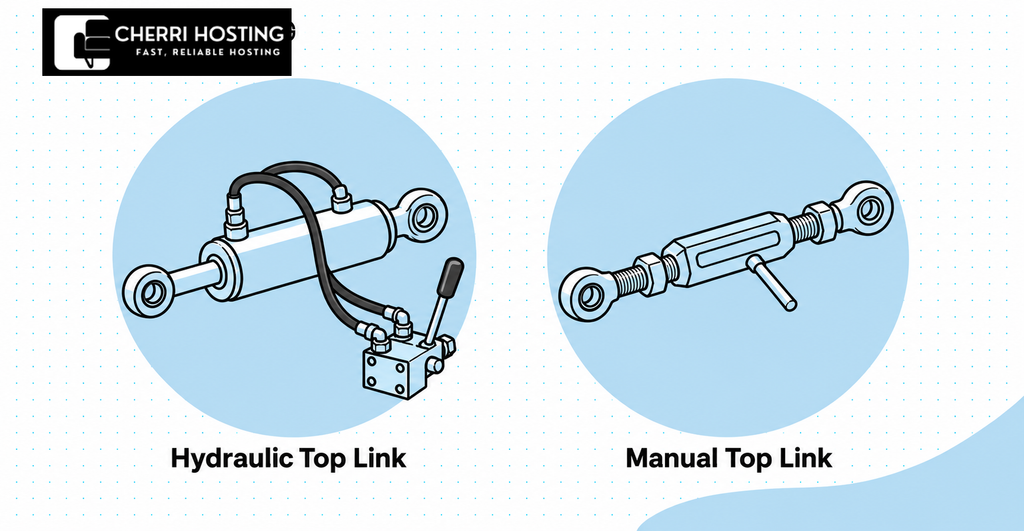
A hydraulic model can reduce interruptions when grading requires repeated pitch changes. However, it adds hydraulic components that require inspection and maintenance. A manual link remains a practical choice when adjustment frequency is low.
The choice also depends on the tractor’s existing equipment. A tractor with suitable rear hydraulic remotes may need fewer additional components. A tractor without hydraulic outlets may require an extra control system.
How Much Does a Hydraulic Top Link Cost, and Is It Worth It?
A hydraulic top link can cost approximately 210–400 for certain Category 1 models in current US listings. The price depends on cylinder dimensions, included components, and manufacturer specifications. Larger equipment and additional hydraulic hardware may cost more.
For example, Summit Hydraulics lists Category 1 standalone cylinders at 209.95–239.95. Its Category 1 top link kits are listed at 309.95–349.95. These are retailer examples, not fixed market prices.
A complete installation may also require rear hydraulic controls, hoses, fittings, or mounting hardware. Those expenses should be included when comparing hydraulic and manual options. Shipping and installation costs can further change the total.
A hydraulic top link is worth considering when implement pitch must be adjusted frequently. It can reduce the need for manual adjustment during grading and attachment setup. For occasional use, keeping a correctly fitted manual link may cost less.
Common Hydraulic Top Link Problems and Maintenance Tips
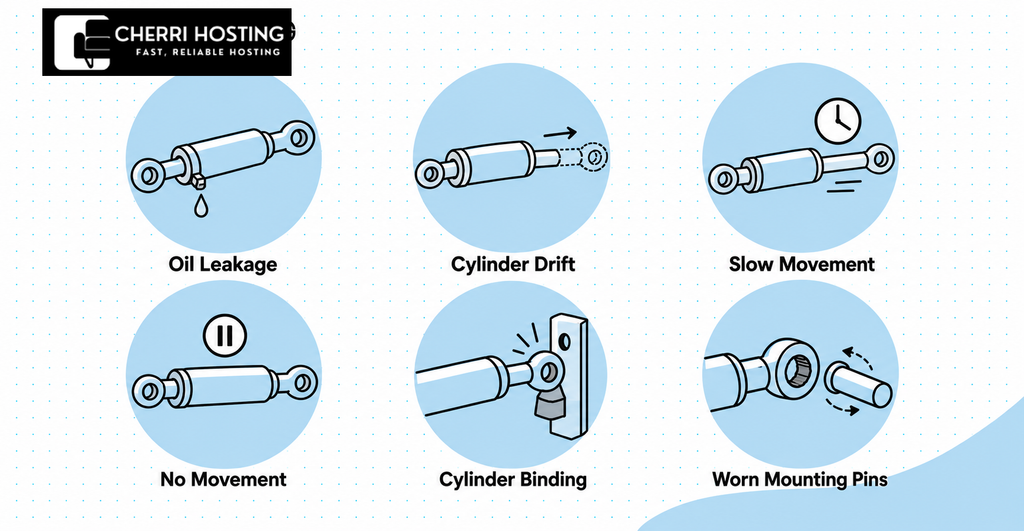
Common hydraulic top link problems include oil leakage, cylinder drift, restricted movement, and worn mounting hardware. These faults can affect adjustment control and equipment positioning. Regular inspection helps identify visible problems before operation.
Common Problems and Their Causes
| Problem | Possible cause | Recommended action |
| Oil leakage | Damaged seals or fittings | Inspect safely and replace faulty components |
| Cylinder drift | Internal leakage or control valve issues | Have the hydraulic circuit diagnosed |
| Slow movement | Restricted flow or connection problems | Check hydraulic supply and compatible couplers |
| No movement | Incorrect connections or control failure | Verify setup and seek qualified assistance |
| Cylinder binding | Incorrect length or mounting geometry | Check dimensions and articulation |
| Excessive pin movement | Worn pins or mounting ends | Replace worn hardware |
Cylinder drift does not always mean the piston seals have failed. Leakage through a control valve or another hydraulic component may produce similar symptoms. A qualified technician can distinguish these causes through appropriate testing.
Maintenance and Safety Tips
Inspect the cylinder, mounting ends, hoses, and fittings before use. Clean exposed piston rods and lubricate joints according to manufacturer instructions. Replace damaged hoses and worn mounting hardware before returning equipment to service.
Never search for a pressurized hydraulic leak using your hands. The UK’s Health and Safety Executive warns that high-pressure fluid can penetrate skin and cause severe injuries. Its safety guidance notes reported injection hazards at pressures as low as approximately 7 bar, or 102 PSI.
Lower and support the implement before hydraulic maintenance. Stop the engine and follow the tractor’s pressure-release procedure. Seek immediate emergency medical treatment if hydraulic fluid penetrates the skin, even when the injury appears small.
Common Mistakes to Avoid When Using a Hydraulic Top Link
The most common hydraulic top link mistakes involve incorrect measurements, unsuitable connections, and unsafe operation. These errors can cause fitting problems, restricted movement, or equipment damage. Avoid the following five mistakes.
- Choosing the wrong hitch category: Confirm pin diameter and mounting dimensions instead of relying on tractor horsepower.
- Ignoring minimum cylinder length: An excessively long cylinder may prevent the implement from reaching its required position.
- Overlooking mounting clearance: Incorrect ball ends or mounting geometry can restrict articulation.
- Using incompatible hydraulic connections: Mismatched fittings or incorrect pressure ratings can create safety and performance problems.
- Skipping hose inspections: Damaged hoses near moving equipment can cause leaks or failure.
Always compare the manufacturer’s specifications against your tractor and implement before installation. Test cylinder travel within the approved working range. Never exceed rated capacity or use hydraulic pressure to force a binding implement.
Frequently Asked Questions About Hydraulic Top Links
Can You Use a Hydraulic Top Link Without Rear Remotes?
Yes, but a suitable hydraulic control circuit must be available or installed. Some tractors can use an appropriately designed diverter valve or an additional rear remote kit. The correct arrangement depends on the tractor’s hydraulic system and manufacturer instructions.
Will a Hydraulic Top Link Fit Any Tractor?
No, hydraulic top links are not universally interchangeable. Hitch category, pin diameter, mounting width, and operating length must match the equipment. Hydraulic pressure ratings and available control connections must also be compatible.
Can You Use a Hydraulic Top Link With a Box Blade?
Yes, a hydraulic top link can adjust a compatible box blade’s forward or backward pitch. This helps change how the cutting edge engages soil or gravel. Follow the box blade manufacturer’s instructions for the correct operating position.
Why Won’t My Hydraulic Top Link Hold Its Position?
Cylinder drift may result from internal seal leakage, valve leakage, or another hydraulic fault. A pilot-operated check valve may reduce unwanted movement when properly installed. Stop using an unstable attachment until the cause is identified and corrected.
Is a Hydraulic Top Link Worth It for a Compact Tractor?
A hydraulic top link can be worthwhile when a compact tractor frequently performs grading or attachment adjustments. It offers convenient pitch control without repeated manual changes. The decision depends on compatibility, hydraulic availability, total cost, and frequency of use.
Conclusion
Choosing the right hydraulic top link starts with matching the cylinder to your tractor and implement. Check the hitch category, operating length, stroke, hydraulic connections, and load requirements. These five steps help prevent common compatibility and installation problems.
A correctly selected hydraulic top link provides convenient adjustment for compatible equipment such as box blades and rear blades. However, safe installation, proper hose routing, and regular maintenance remain essential. Always verify manufacturer specifications before purchasing or operating the equipment.