Top 20 Business Schools Worldwide: Fees & Rankings
Which business school is truly worth your money? Comparing the top business schools worldwide can leave you with more questions than answers. Rankings often disagree, and tuition fees vary widely between schools. Finding the right balance between reputation, cost, and career opportunities isn’t easy.
Choosing the wrong school could mean spending thousands without getting the opportunities you expected. A famous name alone doesn’t guarantee a successful career. You need reliable information before making such an important investment.
This article compares the top 20 business schools worldwide, including their rankings and available tuition fees. You’ll discover what makes each school different and which programs suit your career goals. We’ll also explore admission requirements, scholarships, and graduate employment opportunities. By the end, you’ll be better prepared to choose a school that fits your budget.
Top Business Schools Worldwide: Rankings and Comparison
MIT Sloan, Harvard, Stanford, and Wharton are the four highest-ranked MBA schools worldwide in 2027. The QS Global MBA Rankings 2027 evaluated 424 full-time MBA programs across the world. The United States holds 11 of the top 20 positions, representing 55% of the leading programs.
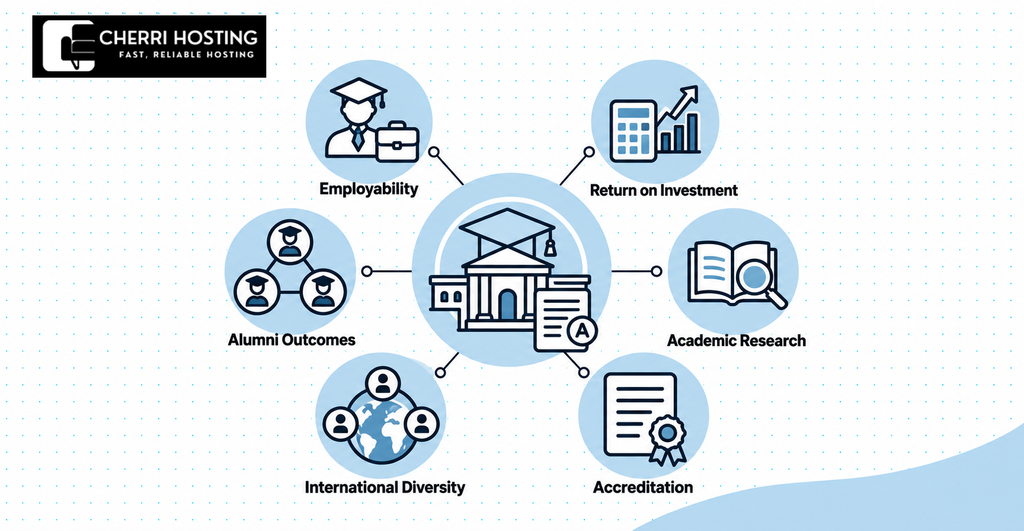
These rankings measure MBA programs rather than entire universities. They consider employability, investment value, academic research, graduate achievements, and diversity. Understanding these factors helps students compare institutions beyond their international reputation.
Top 20 Business Schools Worldwide
MIT Sloan ranks first in the QS Global MBA Rankings 2027, followed by Harvard and Stanford. Wharton ranks fourth after holding first place in the previous edition. Cambridge Judge completes the global top five.
The following table presents all 20 institutions using one consistent ranking source. It identifies each school’s country and position in the 2027 edition. Using one publisher avoids combining incompatible ranking methods.
| Rank | Business School | Country | QS Score |
| 1 | MIT Sloan School of Management | USA | 100.0 |
| 2 | Harvard Business School | USA | 99.1 |
| 3 | Stanford Graduate School of Business | USA | 98.6 |
| 4 | Wharton School, University of Pennsylvania | USA | 98.5 |
| 5 | Cambridge Judge Business School | UK | 98.1 |
| 6 | HEC Paris | France | 97.8 |
| 7 | Oxford Saïd Business School | UK | 97.6 |
| 8 | INSEAD | France | 97.5 |
| 9 | London Business School | UK | 97.4 |
| 10 | Chicago Booth School of Business | USA | 95.9 |
| 11 | IE Business School | Spain | 95.8 |
| 12 | UC Berkeley Haas School of Business | USA | 95.1 |
| 13 | Northwestern Kellogg School of Management | USA | 95.0 |
| 14 | Columbia Business School | USA | 94.9 |
| 15 | Yale School of Management | USA | 94.1 |
| 16 | IESE Business School | Spain | 94.0 |
| 17 | NYU Stern School of Business | USA | 93.6 |
| 18 | UCLA Anderson School of Management | USA | 91.4 |
| 19 | Imperial Business School | UK | 89.4 |
| 20 | SDA Bocconi School of Management | Italy | 89.3 |
Comparison of Rankings, Locations, and MBA Programs
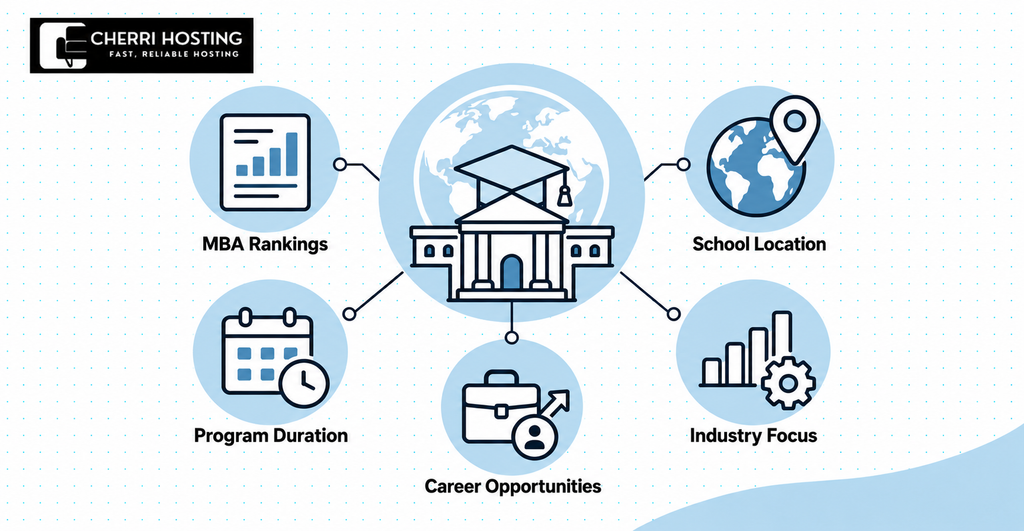
Business school rankings, geographic location, and program duration influence which institution best matches your needs. American schools like MIT Sloan and Harvard generally offer two-year MBA programs. European schools like Cambridge Judge and INSEAD offer shorter full-time alternatives.
Program length can affect your education budget and professional plans. A two-year MBA usually provides more time for internships and career exploration. Shorter programs can reduce time away from employment but may offer different recruitment schedules.
| Business School | Location | MBA Duration |
| MIT Sloan | Cambridge, USA | 2 years |
| Harvard Business School | Boston, USA | 2 years |
| Stanford GSB | Stanford, USA | 2 years |
| Wharton | Philadelphia, USA | 2 years |
| Cambridge Judge | Cambridge, UK | 12 months |
| HEC Paris | France | Approximately 12–16 months, depending on intake |
| INSEAD | France / Singapore | Approximately 10–12 months |
| London Business School | London, UK | 15–21 months |
Program duration refers to the standard full-time MBA pathway and may vary by intake or curriculum choice.
A higher ranking does not automatically provide better career opportunities for every student. For example, Wharton offers extensive finance education, while MIT Sloan emphasizes analytical management and technology. Your preferred industry and employment location should guide your final comparison.
How Are the World’s Best Business Schools Ranked?
The world’s best business schools are ranked using employability, graduate earnings, academic performance, and international reputation. Organizations like QS, Financial Times, and Eduniversal apply different evaluation methods. Consequently, the same institution can receive different positions across ranking publications.
QS, Financial Times, and Eduniversal Rankings
QS evaluates full-time MBA programs using five main performance categories. Employability contributes 40% of the total score, while return on investment contributes 20%. Entrepreneurship and alumni outcomes, thought leadership, and diversity account for the remaining 40%.
| QS Evaluation Category | Weight |
| Employability | 40% |
| Return on Investment | 20% |
| Entrepreneurship and Alumni Outcomes | 15% |
| Thought Leadership | 15% |
| Class and Faculty Diversity | 10% |
The Financial Times Global MBA Ranking 2026 uses 21 evaluation criteria, including salary growth, career progression, and research. It assesses graduate outcomes using alumni responses alongside information provided by schools. Its 2026 ranking placed MIT Sloan first, followed by INSEAD.
Eduniversal takes a different approach by emphasizing international recognition and academic reputation. Its Palmes of Excellence system groups business schools according to their international influence. Its geographic classification also helps applicants discover institutions outside the usual global top 20.
What Makes a Business School Top-Ranked?
A top-ranked business school demonstrates strong educational quality, employer recognition, and measurable graduate outcomes. Ranking publishers evaluate indicators such as recruitment success, alumni achievements, and academic research. However, each organization assigns different importance to these measurements.
Important evaluation factors include:
- Employer reputation: How recruiters view graduates from a particular business school.
- Graduate employment: Job offers and accepted positions after graduation.
- Salary outcomes: Earnings and career advancement following an MBA.
- Academic quality: Faculty research, teaching expertise, and curriculum relevance.
- International diversity: Representation across student and faculty populations.
- Return on investment: Financial benefits relative to education costs.
Accreditation offers another way to assess institutional quality. Organizations like AACSB, AMBA, and EQUIS evaluate business education using established standards. Their recognition should complement ranking information rather than replace a detailed program comparison.
Best Business Schools Worldwide: Leading Institutions
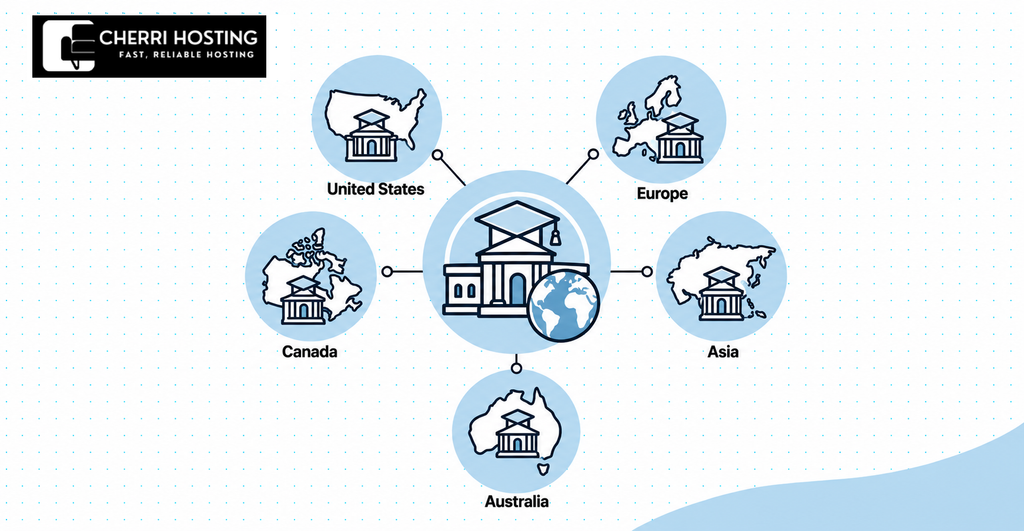
Leading business schools are concentrated in the United States and Europe, with strong alternatives across Asia, Canada, and Australia. Institutions like Harvard, INSEAD, and NUS offer different academic environments and recruitment markets. Exploring these regions helps students choose a location that supports their professional ambitions.
Top Business Schools in the United States
MIT Sloan, Harvard, Stanford, and Wharton hold the first four QS MBA positions for 2027. American MBA programs frequently combine academic study with internships, career services, and employer recruitment. Their strengths vary according to curriculum, industry connections, and location.
Five notable institutions include:
- MIT Sloan: Focuses on innovation, analytical management, entrepreneurship, and technology.
- Harvard Business School: Uses case-based learning to examine business decisions and leadership challenges.
- Stanford GSB: Offers entrepreneurship education near Silicon Valley’s technology ecosystem.
- Wharton: Provides extensive finance coursework alongside marketing and management specializations.
- Chicago Booth: Emphasizes analytical thinking, economics, and flexible course selection.
The United States had 133 MBA programs in the QS Global MBA Rankings 2027. This represented approximately 31% of the 424 ranked programs. However, applicants should also evaluate tuition costs and their ability to work after graduation.
Top Business Schools in Europe
Cambridge Judge, HEC Paris, Oxford Saïd, INSEAD, and London Business School lead Europe’s QS MBA positions. These institutions offer programs covering international management, leadership, entrepreneurship, and finance. European MBA formats also provide alternatives to traditional two-year American degrees.
Cambridge Judge offers a 12-month MBA with practical business projects. HEC Paris emphasizes leadership development and offers flexible MBA duration options. INSEAD operates across international locations, while London Business School provides access to London’s financial and consulting industries.
European programs may appeal to applicants seeking shorter study periods. However, tuition varies considerably between institutions like INSEAD, Cambridge Judge, and London Business School. Applicants should compare full program expenses rather than assuming every European MBA is inexpensive.
Top Business Schools in Asia, Canada, and Australia
NUS, Toronto Rotman, and UNSW AGSM are prominent MBA institutions in Asia, Canada, and Australia. They offer opportunities to study near important regional business markets. Their placement within regional rankings should not be confused with the global top-20 table.
| Region | Notable Business Schools |
| Asia | NUS, Tsinghua University, Singapore Management University |
| Canada | Toronto Rotman, Western Ivey, McGill Desautels |
| Australia | UNSW AGSM, Melbourne Business School, University of Sydney Business School |
Singapore attracts international business activity across finance, logistics, and technology. Canadian institutions offer management education linked to North American business markets. Australian schools provide opportunities to study in established Asia-Pacific commercial centers.
International applicants should review local employment conditions and immigration rules. An MBA qualification does not automatically provide a work visa or permanent residency. Compare official graduate employment outcomes before choosing a destination.
Best Business Schools for Different MBA Specializations
Wharton, INSEAD, MIT Sloan, and Stanford offer established MBA pathways in finance, consulting, technology, and entrepreneurship. Each institution provides different courses, employer relationships, and practical learning opportunities. Specialization choice should reflect your preferred role after graduation.
Best Business Schools for Finance and Consulting
Wharton is recognized for finance education, while INSEAD and MIT Sloan report substantial consulting recruitment. Wharton’s curriculum covers investment management, corporate finance, and financial markets. INSEAD provides international consulting recruitment opportunities through its career development network.
INSEAD reported that 50% of its 2025 MBA graduates entered management consulting. MIT Sloan reported that 32.3% of its employed 2025 graduates entered consulting. These figures demonstrate strong recruitment activity but represent different graduate populations.
Applicants targeting investment banking should examine finance coursework and recruiting reports. Consulting applicants should compare employers like McKinsey, Bain, and Boston Consulting Group. Salary outcomes and geographic recruitment patterns also deserve consideration.

Best Business Schools for Entrepreneurship and Technology
Stanford, MIT Sloan, and UC Berkeley Haas offer strong academic environments for entrepreneurship and technology management. Stanford’s location provides access to Silicon Valley’s startup ecosystem. MIT Sloan supports entrepreneurial development through the Martin Trust Center.
MIT Sloan’s 2025 employment report recorded 23.3% of employed graduates entering technology. It also reported that 11.1% of graduates started businesses. These outcomes indicate relevant pathways for applicants interested in startup development or technology leadership.
Technology-focused students should examine courses in artificial intelligence, product management, and business analytics. Entrepreneurship applicants should review startup support, mentoring, and investor access. The most suitable school depends on the business sector and career stage.
Best Business Schools for Leadership and International Business
Harvard, INSEAD, and London Business School provide MBA education focused on leadership and international management. Harvard emphasizes decision-making through case discussions and management coursework. London Business School offers flexible study options and an international learning environment.
INSEAD’s 2025 graduates secured employment across 57 countries. Its employment report also recorded that 65% changed their sector, function, or country. These figures help demonstrate the program’s international career reach.
Students seeking international careers should examine graduate destination data. Leadership-focused applicants should compare organizational strategy, management, and communication coursework. Alumni networks and recruitment locations can influence long-term career mobility.
Types of Business Degrees and MBA Programs
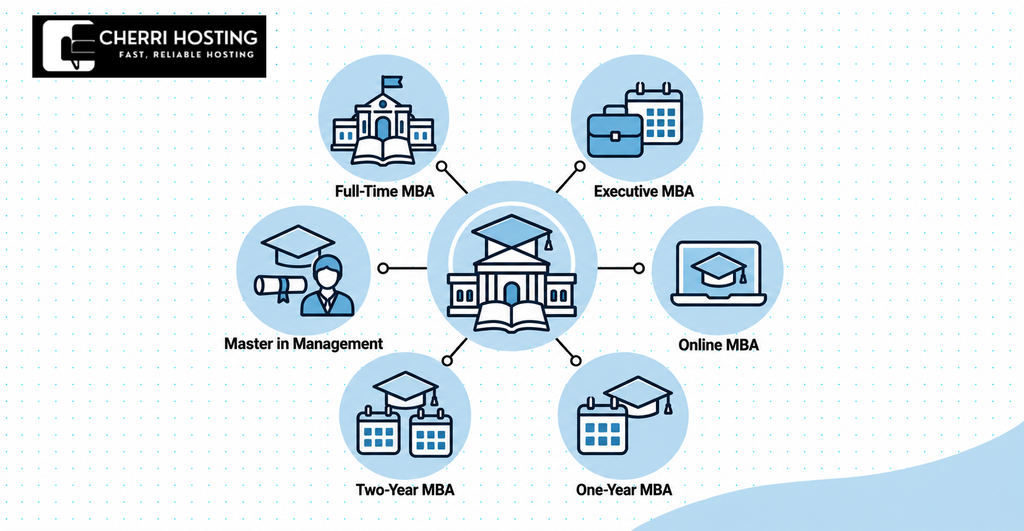
Business schools offer full-time MBAs, Executive MBAs, online degrees, and specialized master’s programs. These qualifications differ in study duration, professional experience requirements, and learning format. Choosing the correct degree is as important as selecting a highly ranked institution.
Full-Time MBA vs Executive MBA
A full-time MBA usually suits career advancement or career switching, while an Executive MBA targets experienced professionals. Full-time students typically dedicate most of their time to campus-based education. Executive MBA participants generally continue working while attending scheduled classes or study modules.
| Feature | Full-Time MBA | Executive MBA |
| Typical audience | Early-to-mid-career professionals | Experienced managers and executives |
| Typical duration | 1–2 years | Around 18–24 months |
| Study format | Full-time | Part-time or modular |
| Main purpose | Career advancement or switching | Senior leadership development |
| Examples | Harvard, INSEAD | Wharton EMBA, MIT EMBA |
Executive MBA tuition can also be substantial despite continued employment. For example, MIT Sloan lists $222,205 for its Executive MBA Class of 2028. Applicants should compare the full financial commitment and program schedule.
One-Year vs Two-Year MBA Programs
One-year MBAs reduce study duration, while two-year MBAs generally provide more time for internships. Cambridge Judge offers a one-year program, while Harvard follows a two-year structure. INSEAD offers an accelerated format with timing differences between intakes.
A shorter MBA can reduce lost income during study. However, an accelerated program may offer fewer opportunities for extended internships. Applicants changing industries should examine the recruitment timetable carefully.
MBA vs Master in Management (MiM)
An MBA generally targets experienced professionals, while a Master in Management usually targets early-career graduates. Both qualifications teach subjects like finance, marketing, strategy, and organizational behavior. However, their admissions expectations and graduate recruitment pathways differ.
| Feature | MBA | Master in Management |
| Target audience | Working professionals | Recent graduates |
| Work experience | Usually expected | Often limited or unnecessary |
| Main goal | Career advancement or change | Entry-level management preparation |
| Example schools | Harvard, INSEAD | HEC Paris, London Business School |
A recent graduate without professional experience may find a MiM more suitable. An experienced manager seeking leadership responsibilities may benefit from an MBA or EMBA. Always compare admission requirements with your existing qualifications.
Admission Requirements for Top Business Schools
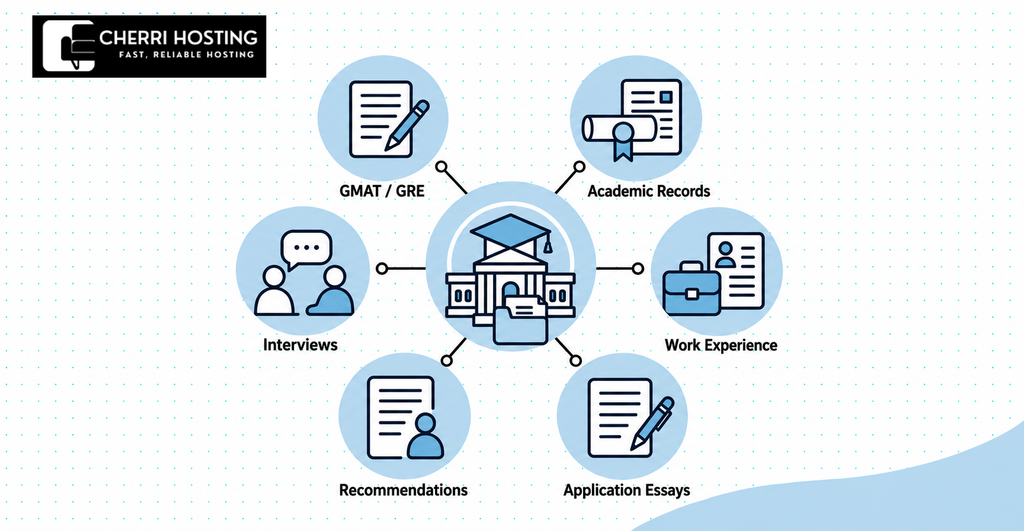
Top business schools generally assess academic qualifications, GMAT or GRE results, professional experience, and leadership potential. Schools like Harvard, Stanford, and Wharton review applicants through a competitive admissions process. Requirements differ by institution, so applicants must check official policies.
Harvard received 9,409 MBA applications for its Class of 2027, with a 12% acceptance rate. Its entering class averaged 4.9 years of work experience. These figures show the competitive applicant environment but do not establish minimum entry requirements.
GMAT, GRE, GPA, and Work Experience
GMAT or GRE performance, academic achievement, and work experience help admissions teams evaluate MBA applicants. The GMAT measures business-related reasoning, while the GRE measures broader academic reasoning skills. A bachelor’s degree is normally required for full-time MBA admission.
| Admission Factor | What Applicants Should Know |
| GMAT/GRE | Check accepted tests and current score requirements |
| GPA | Review class profiles and academic expectations |
| Work experience | Requirements vary by program and career stage |
| English proficiency | TOEFL, IELTS, or another accepted test may apply |
| Professional achievements | Leadership, impact, and career progression matter |
Harvard’s Class of 2027 had an average undergraduate GPA of 3.76. Its reported median GMAT score was 685 on the current scale. These statistics describe admitted students rather than guaranteed admission thresholds.
Some MBA programs permit test waivers or have different testing policies. International applicants may need to demonstrate English proficiency. Previous education in English can sometimes qualify an applicant for an exemption.
Application Process, Essays, and Interviews
MBA applications generally require an online form, academic records, a resume, essays, and recommendation letters. Some institutions also require interviews with shortlisted applicants. Strong applications connect previous achievements with realistic career ambitions.
Follow these six steps:
- Review eligibility: Confirm academic qualifications, accepted tests, and work experience requirements.
- Check deadlines: Identify application rounds and scholarship submission dates.
- Prepare documents: Gather transcripts, test results, and professional records.
- Write essays: Explain leadership achievements and career goals using specific examples.
- Request recommendations: Ask supervisors or professional contacts familiar with your work.
- Prepare for interviews: Practice explaining your experience and reasons for pursuing an MBA.
Avoid submitting identical essays to every school without considering program differences. An application to MIT Sloan may emphasize different career interests than one targeting INSEAD. Applicants should explain why each program supports their goals.
Tuition Fees and Scholarships at Top Business Schools
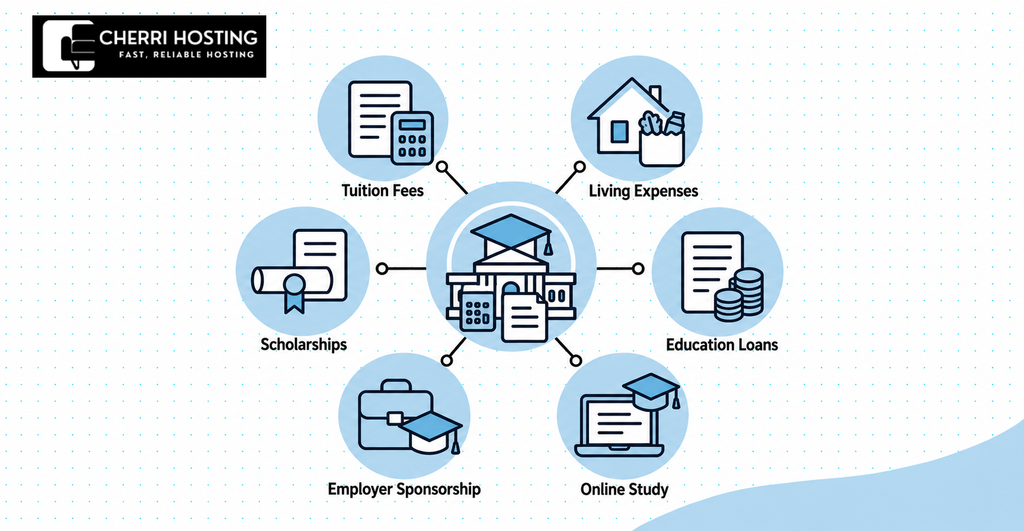
Tuition fees at top business schools can exceed $90,000 annually or €100,000 for a complete MBA program. The amount depends on the institution, study format, and academic year. Scholarships may reduce tuition, but living expenses remain an important financial responsibility.
MBA Tuition Fees and Living Expenses
MBA expenses include tuition, accommodation, food, insurance, travel, and income lost during study. Fees must be compared using the same time period whenever possible. Annual tuition and full-program tuition represent different financial commitments.
The following figures come from official school sources. They use the original currencies and published academic periods. These amounts are not directly comparable until program duration and additional fees are considered.
| Business School | Published Tuition | Period |
| MIT Sloan | $91,892, including mandatory MBA program fee | 2026–27 academic year |
| Stanford GSB | $89,187 | First year, 2026–27 |
| Wharton | $87,970 tuition; $93,008 including university fees | First year, 2026–27 |
| Harvard Business School | Approximately $172,000 tuition and fees combined | Two-year Class of 2026 |
| Cambridge Judge | £86,250 | Full MBA, September 2027 entry |
| INSEAD | €109,860 | Full MBA, August 2026 / January 2027 intake |
| London Business School | £123,950 | Full MBA, 2026 intake |
| HEC Paris | €102,000 | MBA figure published December 2025 |
Important: These are verified examples, not a complete fee comparison for all 20 ranked schools. The remaining institutions publish their own fee schedules, which must be checked for the intended intake. Comparing outdated tuition figures can produce misleading conclusions.
Stanford estimates a $140,940 first-year attendance cost for a single MBA student in 2026–27. Its estimate includes tuition, housing, living expenses, medical insurance, and a health fee. Additional personal circumstances may change the final amount.
Cambridge Judge estimates £20,700 in living expenses for the 2027–28 academic year. London Business School excludes certain program-related travel costs from its tuition figure. Therefore, comparing tuition alone cannot identify the least expensive MBA.
Scholarships and Financial Aid for International Students
International students can pursue scholarships, institutional grants, employer sponsorship, and eligible education loans. Universities use different funding criteria, including financial need, academic achievement, and leadership potential. Funding availability also varies by nationality, program, and application round.
Harvard provides need-based MBA fellowships to qualifying students. Its April 2026 institutional report stated that 41% of students received fellowships across the Classes of 2026 and 2027. The reported average two-year fellowship for the Class of 2026 was approximately $90,500.
INSEAD offers institutional scholarships and information about international funding sources. London Business School provides internal scholarship consideration for admitted students. Cambridge Judge offers scholarships, merit bursaries, external funding, and potential employer sponsorship.
A full-tuition scholarship may not cover accommodation, travel, or health insurance. Applicants should check whether an award is renewable, conditional, or restricted by nationality. Scholarship deadlines may also differ from MBA application deadlines.
Affordable Alternatives to Expensive MBA Programs
Shorter MBA programs, public universities, and online study can reduce the financial burden. However, a shorter degree is not necessarily cheaper than a two-year program. Compare total expenses and employment outcomes before choosing an alternative.
Potential approaches include:
- Shorter programs: Evaluate Cambridge Judge or other accelerated MBA formats.
- Public universities: Compare accredited MBA programs at institutions with lower published tuition.
- Online study: Consider accredited programs that allow continued employment.
- Employer funding: Ask whether your employer provides tuition sponsorship or reimbursement.
- Scholarship-supported study: Compare net tuition after confirmed funding.
For example, keeping a full-time job during an online MBA may reduce lost earnings. However, online programs may provide different networking and recruitment experiences. Select the format that matches your career goals and available time.
Career Opportunities, MBA Salaries, and Return on Investment
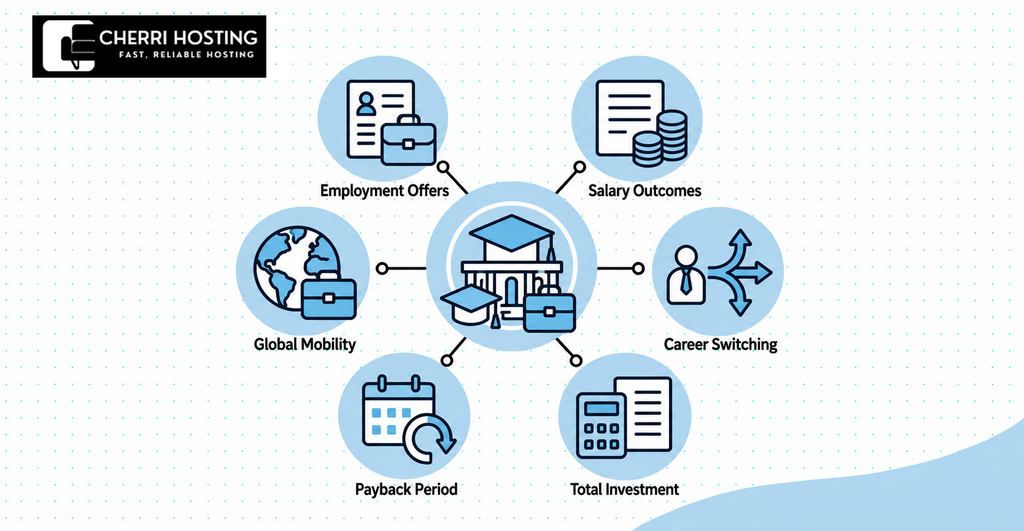
Leading MBA programs provide pathways into consulting, finance, technology, entrepreneurship, and general management. Graduate salary outcomes help measure potential financial benefits. However, employment rates and compensation must be interpreted alongside location and previous work experience.
Graduate Employment Rates and Salary Outcomes
MIT Sloan reported a $175,000 median base salary for its 2025 MBA graduates with reported salary data. The school also reported that 91% of job seekers received offers within three months. These figures represent different measures of graduate employment success.
INSEAD reported an overall €100,000 median annual salary for its 2025 graduates. It also reported that 81% received at least one job offer within three months. Its graduates secured employment across 57 countries.
| Business School | Reported 2025 Outcome |
| MIT Sloan | $175,000 median annual base salary |
| MIT Sloan | 91% of job seekers received offers within three months |
| INSEAD | €100,000 median annual base salary |
| INSEAD | 81% received job offers within three months |
| INSEAD | 65% changed sector, function, or country |
Consulting, finance, and technology attract different shares of MBA graduates. MIT Sloan’s 2025 industry breakdown reported 32.3% consulting, 23.3% technology, and 20.6% finance. Employment percentages can differ depending on whether reports measure all graduates or only employed respondents.
Salaries across different countries should not be compared without context. Taxes, local living expenses, bonuses, and currency values affect real purchasing power. Published median salaries also cannot guarantee an individual graduate’s earnings.
Is an MBA from a Top Business School Worth the Cost?
An MBA can be financially worthwhile when career benefits exceed total education costs and lost earnings. Return on investment compares the financial gain with the amount invested. An expensive degree may take several years to recover its cost.
Consider this simplified hypothetical example. The student earns $80,000 annually before beginning the MBA. After graduating, their annual salary increases to $130,000.
| Financial Factor | Example |
| Tuition | $100,000 |
| Living expenses | $30,000 |
| Lost employment income | $70,000 |
| Total investment | $200,000 |
| Previous annual salary | $80,000 |
| New annual salary | $130,000 |
| Annual salary increase | $50,000 |
| Simple payback period | 4 years |
Simple payback period = Total investment ÷ Annual salary increase.
Dividing $200,000 by $50,000 gives a four-year estimated payback period. This example excludes taxes, interest, future salary growth, and investment alternatives. Actual financial returns may therefore be higher or lower.
MBA value can also include international mobility and career switching. INSEAD’s reported career transitions illustrate how graduates use the qualification to change professional direction. However, applicants should assess whether such opportunities match their personal goals.
How to Choose the Right Business School
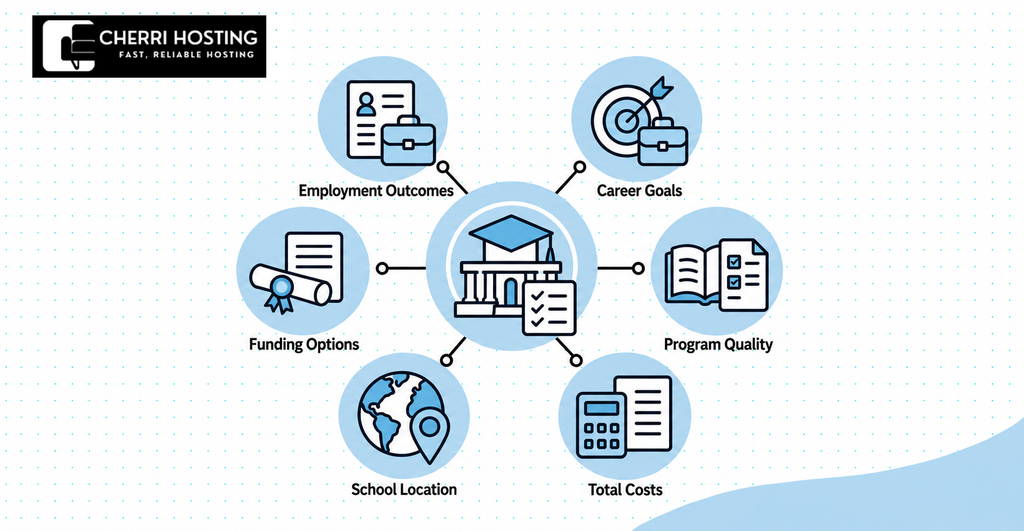
Choose the right business school by comparing career goals, program quality, total costs, and employment opportunities. Start with three to five institutions that match your academic background and preferred location. Then evaluate each school using consistent criteria.
Compare Rankings, Career Goals, and Program Quality
Global rankings provide a starting point, but career fit should determine your shortlist. Students interested in finance might examine Wharton, while technology applicants may investigate MIT Sloan. Entrepreneurship applicants can explore Stanford’s startup ecosystem.
Review these factors when comparing schools:
- Curriculum: Does the MBA offer relevant courses and specializations?
- Accreditation: Is the program or institution recognized by AACSB, AMBA, or EQUIS?
- Employment reports: Where do graduates work after completing their studies?
- Program format: Does the schedule match your professional situation?
- Career services: What recruitment support and networking opportunities are available?
A highly ranked program may not offer the specialization you need. Its graduates may also pursue careers in locations unrelated to your plans. Review actual outcomes before relying on reputation alone.
Consider Location, Budget, and International Career Opportunities
Location influences living expenses, recruitment opportunities, and international work authorization. London offers access to financial employers, while Singapore provides connections to Asia-Pacific business markets. Boston and California provide different academic and employment environments.
| Decision Factor | Questions to Ask |
| Budget | Can I afford tuition and living expenses? |
| Location | Where do I want to work after graduation? |
| Scholarship | What funding am I eligible to receive? |
| Career outcomes | Which employers recruit graduates? |
| Visa rules | Can I legally work after completing the program? |
| Program length | How long can I remain outside full-time employment? |
International applicants should review official immigration information for their destination. Visa eligibility can depend on nationality, program details, and changing government policies. A university admission offer does not guarantee post-graduation employment permission.
Common Mistakes to Avoid When Choosing a Business School
The biggest selection mistake is treating a high ranking as proof of personal suitability. A school must fit your career objectives and financial resources. Ignoring admission requirements can also lead to unrealistic applications.
Avoid these five errors:
- Comparing rankings incorrectly: Do not treat MBA rankings as identical to university subject rankings.
- Ignoring total expenses: Include housing, insurance, travel, and lost income.
- Overlooking employment outcomes: Check recruitment industries, salaries, and job locations.
- Choosing the wrong degree: Compare full-time MBA, Executive MBA, and MiM formats.
- Missing funding deadlines: Review scholarship applications before submitting admission documents.
Create a simple comparison sheet for your shortlisted schools. Record ranking source, program duration, tuition, funding, and preferred career outcomes. This approach makes your final decision more transparent and easier to explain.
Future Trends in Global Business Education
Global business education is increasingly addressing artificial intelligence, data analytics, sustainability, and changing leadership requirements. Business schools are adapting coursework to reflect evolving workplace demands. Students should consider these developments when evaluating long-term program relevance.
Five trends deserve attention:
- Artificial intelligence: Programs increasingly discuss AI strategy, automation, and technology-driven decisions.
- Business analytics: Data interpretation supports decision-making in finance, marketing, and operations.
- Leadership: Communication, judgment, and collaboration remain important management capabilities.
- Flexible education: Online, hybrid, and modular formats offer alternatives to traditional study.
- Sustainability: Responsible management and environmental considerations feature in business education.
The QS 2027 rankings also recognize specialized master’s education in business analytics and supply chain management. MIT leads globally in both areas through its relevant specialist programs. These rankings demonstrate how business education extends beyond the traditional MBA.
Prospective MBA applicants should examine how schools teach emerging business skills. Technology coursework should complement strategy, communication, and leadership development. The goal is to choose education relevant to both current responsibilities and future career changes.
Frequently Asked Questions
Which Is the No. 1 Business School in the World?
MIT Sloan ranks first in the QS Global MBA Rankings 2027. Harvard Business School ranks second, followed by Stanford in third place. Other ranking organizations may produce different results because they use different evaluation methods.
Which Country Has the Best Business Schools?
The United States holds 11 of the top 20 positions in the QS Global MBA Rankings 2027. European countries like the United Kingdom, France, Spain, and Italy also appear in the top 20. The best destination depends on your career goals, budget, and preferred employment market.
Can I Get Into a Top Business School Without a GMAT Score?
Some business schools accept GRE scores or offer eligibility-based testing alternatives. However, policies differ by school and degree format. Check current official admission requirements before deciding whether to take an entrance exam.
Which Top Business Schools Offer Scholarships?
Harvard, INSEAD, London Business School, and Cambridge Judge offer different forms of MBA financial support. Scholarships may consider financial need, academic achievement, or professional experience. Applicants should verify eligibility and whether awards cover tuition or additional living expenses.
Can International Students Work Abroad After Completing an MBA?
International MBA graduates may qualify for post-study employment permission, depending on local immigration rules. Requirements vary between countries like the United States, United Kingdom, and Canada. Students should consult official immigration sources before making enrollment decisions.
Is an MBA Still Worth Pursuing in 2027?
An MBA may be worthwhile when it supports career advancement, stronger professional connections, or a realistic salary increase. However, tuition costs and lost income can significantly affect financial returns. Compare employment outcomes with your career plans before committing to a program.
Conclusion: Finding the Best Business School for Your Goals
The top 20 business schools worldwide offer different strengths in education, career outcomes, and international opportunities. MIT Sloan leads the QS Global MBA Rankings 2027, followed by Harvard, Stanford, and Wharton. However, ranking position alone cannot determine which school is best for you.
Compare tuition fees, scholarships, program duration, admissions requirements, and graduate employment results. Consider your preferred industry and where you want to work after graduation. A well-researched decision can help you avoid unnecessary expenses and choose a suitable qualification.
Start by shortlisting three to five business schools that match your goals and budget. Use current official tuition pages and employment reports before applying. The right MBA should support your future career without creating an unrealistic financial commitment.