Top 10 Oil Producing Countries: 2026 Rankings & Data
Which country produces the most oil: the United States, Saudi Arabia, or Russia? Finding the top 10 oil producing countries isn’t as simple as it sounds. Different websites show conflicting rankings, outdated figures, and confusing production numbers.
These differences make it harder to find accurate information about global oil production. You might compare several sources and still wonder which ranking is correct. Without clear data, understanding each country’s position becomes frustrating.
This article provides the 2026 rankings using the latest complete annual oil production data. You’ll discover how much oil each country produces daily and why some countries lead. You’ll also learn about oil reserves, global supply, and the factors shaping future production.
Top 10 Oil Producing Countries Ranked
The United States ranks first among the world’s top 10 oil producing countries, followed by Russia and Saudi Arabia. According to the U.S. Energy Information Administration (EIA), American production averaged 13.66 million barrels daily in 2025. Russia produced 9.89 million barrels daily, while Saudi Arabia produced 9.55 million.
The following table shows the latest complete annual comparison available for this 2026 ranking. Production is measured in million barrels per day, abbreviated as mb/d. Global market share represents each country’s percentage of worldwide crude oil production.
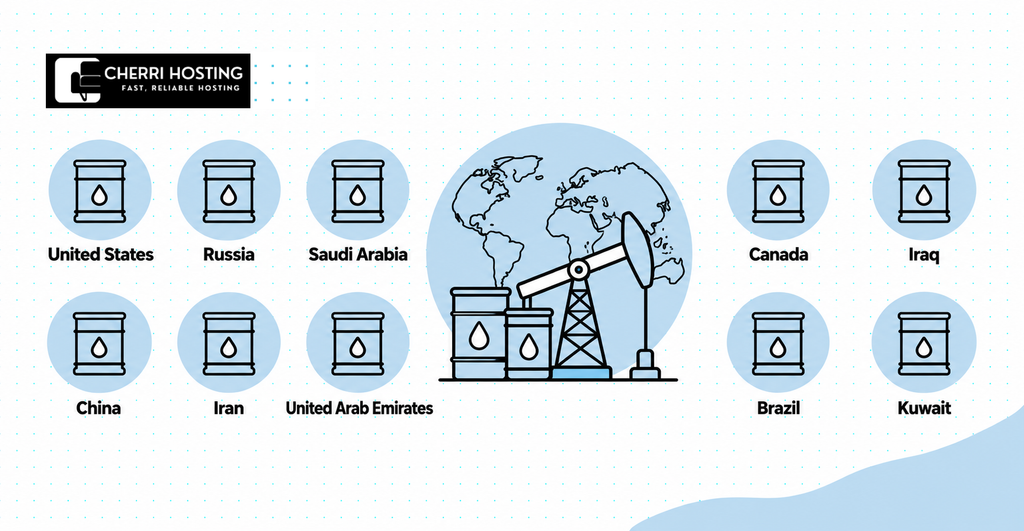
| Rank | Country | Production (Million Barrels/Day) | Global Share |
| 1 | United States | 13.66 | 16.2% |
| 2 | Russia | 9.89 | 11.7% |
| 3 | Saudi Arabia | 9.55 | 11.3% |
| 4 | Canada | 4.96 | 5.9% |
| 5 | Iraq | 4.39 | 5.2% |
| 6 | China | 4.33 | 5.1% |
| 7 | Iran | 4.05 | 4.8% |
| 8 | United Arab Emirates | 3.77 | 4.5% |
| 9 | Brazil | 3.77 | 4.5% |
| 10 | Kuwait | 2.58 | 3.1% |
Source: EIA International Energy Statistics, 2025. Global shares use worldwide production of approximately 84.46 million barrels daily. Figures are rounded, and EIA estimates may be revised.
Together, these ten countries produced approximately 60.95 million barrels daily, representing 72.2% of global crude oil production. The United States alone contributed 16.2%, exceeding Russia’s 11.7% share. The top three countries accounted for approximately 39.2% of worldwide output.
These rankings measure crude oil including lease condensate, not every type of petroleum liquid. Lease condensate is light petroleum recovered near oil and gas production sites. Rankings using broader petroleum measures may produce different country positions.
Top 10 Largest Oil Producing Countries Explained
The United States, Russia, and Saudi Arabia dominate global crude oil production, while Canada ranks fourth. Iraq, China, Iran, the UAE, Brazil, and Kuwait complete the ten largest producers. Their production depends on underground resources, extraction technology, infrastructure, investment, and national energy policies.
1. United States
The United States is the world’s largest oil producer, averaging 13.66 million barrels daily in 2025. It accounted for approximately 16.2% of global crude oil production. According to the EIA, the country has maintained its leading position since 2018.
The Permian Basin, located across Texas and New Mexico, contributes heavily to American production. Other important oil-producing regions include North Dakota’s Bakken Formation and Texas’s Eagle Ford Shale. These areas contain substantial petroleum resources trapped inside underground rock formations.
Horizontal drilling and hydraulic fracturing support America’s high production levels. Horizontal drilling allows companies to reach oil across wider underground areas. Hydraulic fracturing uses pressurized fluid to create small cracks that allow petroleum to flow toward wells.
The United States also benefits from extensive pipelines, refineries, skilled workers, and energy investment. Improvements in drilling efficiency help operators recover more oil from individual wells. These advantages explain why American production exceeds that of Saudi Arabia and Russia.
2. Russia
Russia ranks second globally, producing approximately 9.89 million barrels of crude oil daily in 2025. This represented around 11.7% of worldwide production. Its petroleum industry relies on extensive reserves and established extraction infrastructure.
Western Siberia is Russia’s most important oil-producing region. Major fields include Samotlor, Priobskoye, and Vankor, which support substantial output. Other petroleum-producing areas include the Volga-Ural region, Eastern Siberia, and Arctic territories.
Rosneft and Lukoil are important companies in Russia’s petroleum industry. Oil pipelines connect production centers with domestic refineries and export terminals. These transportation networks support petroleum trade with international customers.
International sanctions have affected Russian oil exports since the 2022 invasion of Ukraine. Restrictions involving shipping, financing, and technology have changed trade relationships. Russia has redirected substantial petroleum exports toward Asian markets, particularly China and India.
3. Saudi Arabia
Saudi Arabia ranks third, producing approximately 9.55 million barrels of crude oil daily in 2025. Its output represented about 11.3% of global production. The country remains a major supplier because of its substantial petroleum reserves.
Saudi Arabia operates some of the world’s largest conventional oil fields. Ghawar is a major onshore field, while Safaniya is an important offshore field. These resources support large-scale extraction and international petroleum exports.
Saudi Aramco manages most of Saudi Arabia’s oil production infrastructure. The state-controlled company operates oil fields, processing facilities, pipelines, and export terminals. Its integrated operations help transport crude oil from production areas to international markets.
Saudi Arabia is a founding member of OPEC and plays a central role in OPEC+. Production agreements can increase or reduce the amount of Saudi crude entering global markets. Available production capacity also allows Saudi Arabia to adjust output when market conditions change.
4. Canada
Canada ranks fourth worldwide, producing approximately 4.96 million barrels of oil daily in 2025. Its production accounted for around 5.9% of global crude oil output. Alberta provides most of Canada’s petroleum production.
The Athabasca, Cold Lake, and Peace River regions contain extensive oil sands deposits. Oil sands contain bitumen, a thick form of petroleum mixed with sand and water. Extracting this resource requires different methods from conventional oil drilling.
Canadian companies use surface mining and underground recovery to extract bitumen. Surface mining removes deposits located relatively close to the ground’s surface. Deeper resources often require steam-assisted gravity drainage, which uses heat to help petroleum flow.
The United States remains Canada’s largest crude oil export market. Pipelines transport Canadian petroleum to American refineries and other destinations. The Trans Mountain pipeline expansion, opened in 2024, increased Canada’s access to Pacific export markets.
5. Iraq
Iraq ranks fifth globally, producing approximately 4.39 million barrels of crude oil daily in 2025. This accounted for about 5.2% of worldwide output. Most of Iraq’s major producing fields are concentrated in the southern region.
Important oil fields include Rumaila, West Qurna, and Majnoon near Basra. Northern Iraq also contains petroleum resources around Kirkuk. These fields make Iraq one of the Middle East’s largest crude oil producers.
Oil exports provide a major source of revenue for Iraq’s government. Much of its exported petroleum moves through southern terminals near the Persian Gulf. Iraq also participates in OPEC+ agreements that influence production decisions.
However, infrastructure limitations can restrict future production growth. Aging pipelines, limited water supplies, and investment delays create additional challenges. Improving extraction facilities and export infrastructure remains important for maintaining reliable output.
6. China
China ranks sixth, producing approximately 4.33 million barrels of crude oil daily in 2025. Its production represented about 5.1% of the global total. China maintains substantial domestic production despite depending heavily on imported petroleum.
Important oil-producing regions include Daqing in Heilongjiang and Shengli in Shandong. Offshore production in the Bohai Sea also contributes to national output. State-owned companies such as CNPC, Sinopec, and CNOOC manage major petroleum operations.
China consumes more oil than it produces domestically. According to the EIA, China imported approximately 11.6 million barrels of crude oil daily in 2025. Major international suppliers include Russia and Saudi Arabia.
High demand from transportation, manufacturing, and petroleum refining explains China’s import dependence. Domestic production helps reduce exposure to international supply disruptions. Continued investment in offshore drilling and mature oil fields supports national energy security.
7. Iran
Iran ranks seventh globally, producing approximately 4.05 million barrels of crude oil daily in 2025. Its output represented about 4.8% of global production. The country possesses substantial proven petroleum reserves.
Major oil fields include Ahvaz, Gachsaran, Marun, and Azadegan. Many important deposits are located in southwestern Iran near the Persian Gulf. The National Iranian Oil Company oversees much of the country’s petroleum development.
International sanctions have restricted Iran’s access to financing, technology, and export markets. These restrictions can delay investment in equipment and oil field development. However, Iran has continued supplying crude oil to international customers, particularly China.
Iran was one of OPEC’s five founding members in 1960. Its future production depends on field investment, infrastructure development, and international trade conditions. Improved access to technology could help increase output from existing petroleum resources.
8. United Arab Emirates
The United Arab Emirates ranks eighth, producing approximately 3.77 million barrels of crude oil daily in 2025. It accounted for around 4.5% of global output. Most UAE petroleum production comes from Abu Dhabi.
Important oil fields include Upper Zakum, Lower Zakum, and Bab. Offshore platforms and onshore facilities support extraction across these producing areas. Abu Dhabi National Oil Company, known as ADNOC, oversees major petroleum development projects.
ADNOC aims to reach 5 million barrels per day of production capacity by 2027. This target represents potential output rather than actual daily production. Investment in drilling equipment and extraction infrastructure supports the company’s expansion plans.
The UAE joined OPEC in 1967 and participated in OPEC+ production coordination. It officially left OPEC and OPEC+ on May 1, 2026. This decision gave the country greater independence over future petroleum production policies.
9. Brazil
Brazil ranks ninth, producing approximately 3.77 million barrels of crude oil daily in 2025. Its global production share was approximately 4.5%. Offshore petroleum development has helped Brazil increase output.
The Santos Basin and Campos Basin are important production regions along Brazil’s southeastern coastline. Major fields include Tupi, Búzios, and Sapinhoá. Many of these petroleum deposits lie beneath thick underground salt layers.
Brazil’s pre-salt oil fields are central to its production growth. Pre-salt reserves require drilling through deep water and underground salt formations. Specialized equipment and offshore platforms allow companies to reach these deposits.
Petrobras operates many of Brazil’s largest offshore petroleum projects. Investment in deepwater technology has improved extraction from difficult underwater reservoirs. Rising offshore production has strengthened Brazil’s position as a major oil exporter.
10. Kuwait
Kuwait ranks tenth globally, producing approximately 2.58 million barrels of crude oil daily in 2025. This represented around 3.1% of worldwide production. Petroleum remains central to Kuwait’s economy and government revenue.
The Greater Burgan field is Kuwait’s most important oil-producing area. It is among the world’s largest conventional petroleum fields. Other important deposits include Raudhatain and Sabriya in northern Kuwait.
Kuwait Petroleum Corporation oversees the country’s state-owned petroleum industry. Kuwait Oil Company manages important exploration and extraction activities. Pipelines and export terminals connect production facilities with international petroleum markets.
Kuwait was a founding member of OPEC in 1960. Its production decisions are influenced by OPEC+ agreements and national investment plans. Maintaining mature oil fields and expanding extraction capacity remain important long-term priorities.
What Makes These Countries the Largest Oil Producers?
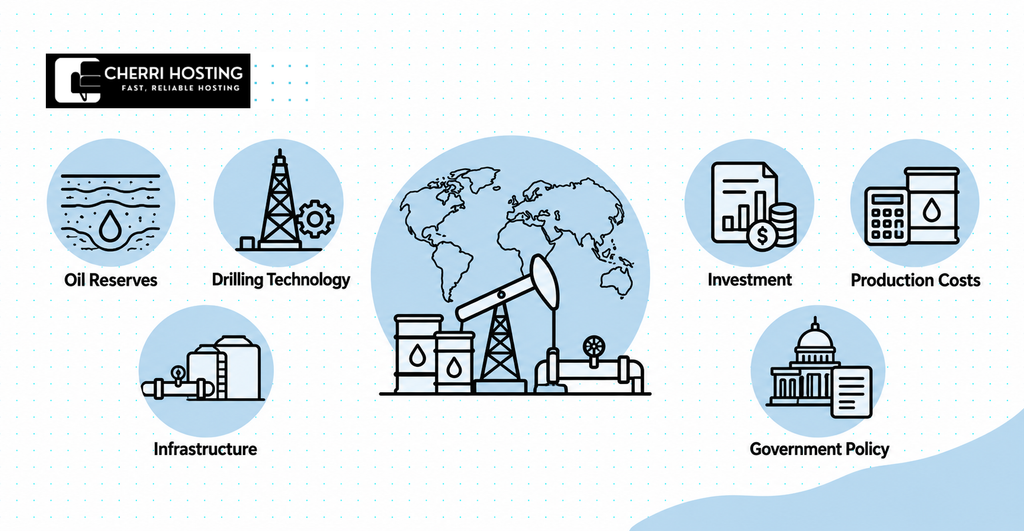
Large petroleum reserves, advanced drilling technology, infrastructure, investment, and government policies determine which countries produce the most oil. These factors influence how much crude oil can be extracted and transported economically. Countries with strong production systems can maintain higher output over longer periods.
Proven oil reserves provide the foundation for future petroleum extraction. Saudi Arabia, Canada, and Iran have substantial recoverable resources. However, reserve size alone does not determine daily production.
Modern drilling technology helps increase oil production from difficult underground deposits. American companies use horizontal drilling and hydraulic fracturing to extract shale oil. According to the EIA, the Permian region produced 6.6 million barrels daily in 2025. This represented approximately 48% of total US crude oil output.
Government investment also influences production capacity and infrastructure development. Saudi Aramco and ADNOC invest in drilling equipment, processing facilities, and petroleum transportation. Pipelines and export terminals help producers deliver crude oil to international markets.
Production costs and political stability also affect extraction decisions. Conventional oil fields in Saudi Arabia generally have lower extraction costs than complex offshore developments. Meanwhile, sanctions and political uncertainty can restrict financing, equipment access, and petroleum exports.
Oil Production vs. Oil Reserves: What’s the Difference?
Oil production measures petroleum extracted during a period, while oil reserves represent recoverable petroleum remaining underground. Production is usually reported in barrels per day. Reserves are measured in total barrels and estimate how much oil can be extracted economically.
According to the EIA, proven reserves must be recoverable under existing economic and operating conditions. These estimates depend on geological evidence, extraction technology, and production costs. New discoveries or changing economic conditions can increase or reduce reported reserves.
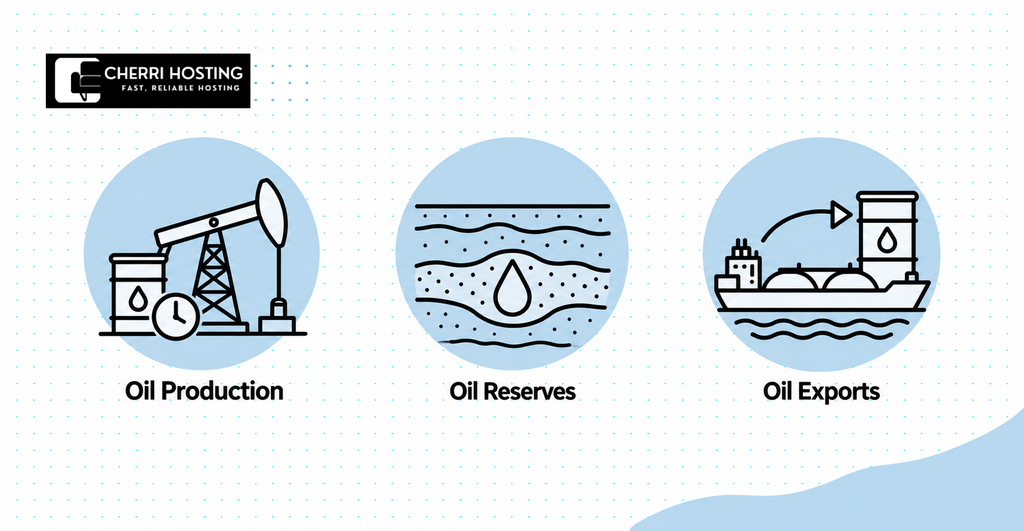
Venezuela demonstrates why large oil reserves do not guarantee high production. Despite holding substantial petroleum resources, Venezuela produced approximately 973,000 barrels daily in 2025. Investment shortages, infrastructure problems, and sanctions have restricted its extraction capacity.
By comparison, the United States produced 13.66 million barrels daily in 2025. Advanced drilling technology, extensive infrastructure, and commercial investment supported this output. Therefore, a country can lead global production without possessing the largest proven reserves.
Oil production and oil exports are also different measurements. Production represents extracted petroleum, while exports represent oil sold to foreign markets. China produces considerable crude oil but imports additional supplies because domestic consumption exceeds production.
Saudi Arabia exports a substantial share of its petroleum production. The United States also exports crude oil while importing certain grades for domestic refineries. Consequently, the largest producer is not necessarily the largest exporter or reserve holder.
How Do OPEC and Non-OPEC Countries Compare?
OPEC coordinates petroleum policies among member countries, while non-OPEC producers operate outside the organization. Both influence global oil supply and international prices. However, their production decisions follow different government and commercial arrangements.
The Organization of the Petroleum Exporting Countries, known as OPEC, was founded in 1960. Founding members included Saudi Arabia, Iraq, Iran, Kuwait, and Venezuela. Its purpose includes coordinating petroleum policies and supporting stability in international oil markets.
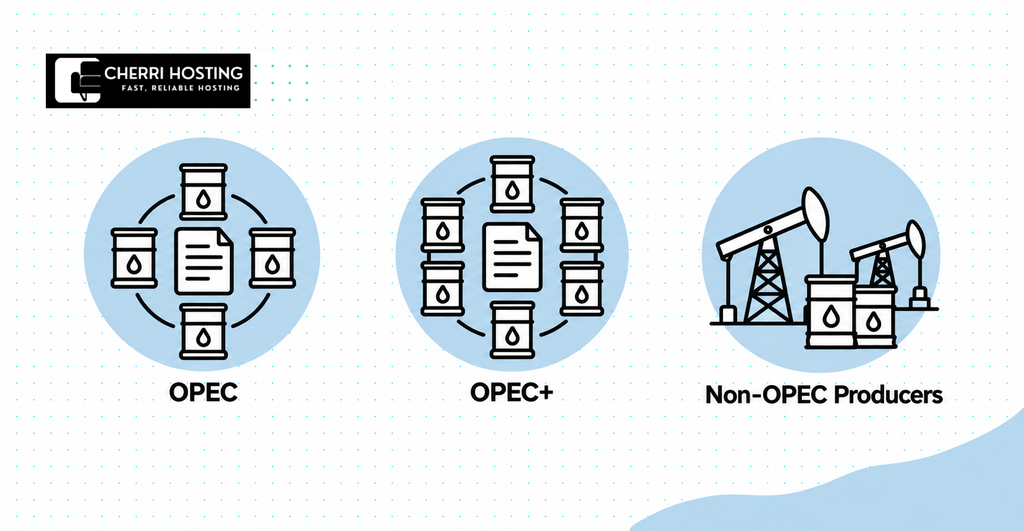
OPEC+ is a broader alliance that includes participating non-OPEC producers. Russia, Kazakhstan, and Oman are examples of countries participating alongside OPEC members. The alliance coordinates production adjustments to influence available market supply.
Major non-OPEC producers include the United States, Canada, China, and Brazil. American production generally responds to market prices, investment decisions, and commercial drilling activity. These countries do not follow OPEC production quotas.
The UAE left OPEC and OPEC+ on May 1, 2026, after nearly 60 years of membership. Its government announced the decision on April 28, 2026. The change gave the UAE greater independence over its future production strategy.
Production cuts by OPEC+ can reduce available crude oil supply. If demand remains unchanged, lower supply can place upward pressure on prices. However, production growth elsewhere or weaker demand can reduce that effect.
How Has Global Oil Production Changed Over Time?
Global oil production rankings changed substantially after 2008, mainly because American shale oil output expanded rapidly. Saudi Arabia and Russia previously competed for the leading position. Improved extraction technology helped the United States move ahead.
American crude oil production was approximately 5 million barrels daily in 2008. It reached a record 13.66 million barrels daily in 2025. According to the EIA, the United States became the largest producer in 2018.
Horizontal drilling and hydraulic fracturing made previously inaccessible shale deposits commercially productive. The Permian Basin, Bakken Formation, and Eagle Ford Shale contributed to this expansion. Better drilling efficiency also helped increase output from individual wells.
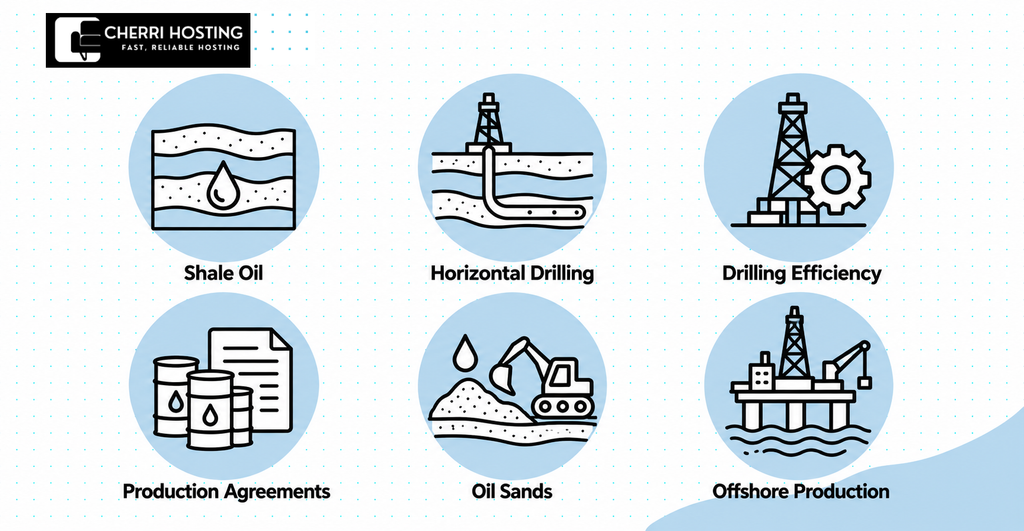
Saudi Arabian production has changed with OPEC+ agreements and global market conditions. Output increased during periods of stronger demand and declined under certain coordinated production cuts. Russia also adjusted production through OPEC+ arrangements while facing international sanctions.
Canada and Brazil have become increasingly important contributors to global crude supply. Canadian oil sands development expanded production, while Brazilian offshore projects increased output. These examples show how technology and investment can change long-term rankings.
How Does Oil Production Affect the Global Economy?
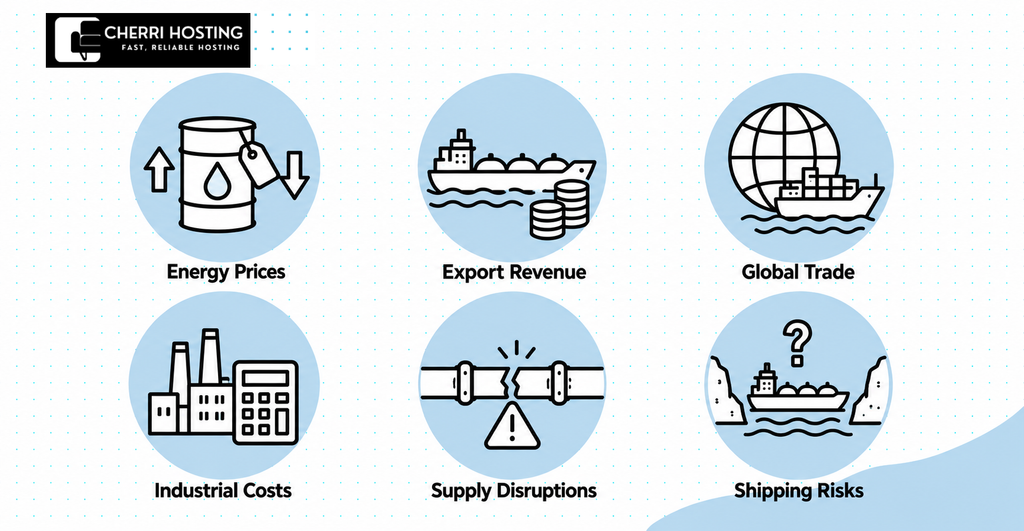
Oil production affects the global economy through energy prices, export revenue, trade, and industrial costs. Major exporters like Saudi Arabia, Iraq, and Kuwait depend heavily on petroleum-related income. Their oil revenue helps finance government spending and economic development.
Global oil supply influences crude oil prices. When production declines but demand remains steady, prices can increase. Higher petroleum costs can affect transportation, manufacturing, agriculture, and international trade.
For example, the EIA reported that average West Texas Intermediate oil prices fell from $77 in 2024 to $65 per barrel in 2025. Increased supply contributed to downward price pressure during that period. Lower crude prices can reduce fuel costs while also decreasing producer revenue.
Geopolitical events can disrupt production and international petroleum shipments. Wars, sanctions, and damaged infrastructure may limit available supply. Disruptions involving major shipping routes, particularly the Strait of Hormuz, can also increase transportation risks.
Future of Oil Production: Which Countries Will Lead by 2030?
The United States, Saudi Arabia, and Russia are likely to remain major oil producers through 2030. However, their exact future rankings cannot be confirmed. Technology, investment, production policies, and global demand will influence their positions.
American shale production will continue depending on drilling efficiency and commercial investment. Saudi Arabia may adjust production through available capacity and its role in OPEC+. Brazil and Canada could expand output through offshore projects and oil sands development.
According to the International Energy Agency’s Oil 2025 report, global oil production capacity could reach 114.7 million barrels daily by 2030. This represents an increase of approximately 5.1 million barrels daily from 2024. The forecast includes natural gas liquids and other petroleum products beyond crude oil.
Electric vehicles and renewable energy could slow future oil demand growth. The IEA forecast global oil demand would reach approximately 105.5 million barrels daily by 2030. Electric vehicles could displace 5.4 million barrels of daily oil demand by that year.
However, transportation, aviation, shipping, and petrochemical manufacturing will continue requiring petroleum products. Future supply will also depend on geopolitical developments and investment decisions. Consequently, 2030 production rankings should be treated as projections rather than confirmed outcomes.
Conclusion
The United States leads the top 10 oil producing countries, followed by Russia and Saudi Arabia. EIA data shows American crude oil production reached 13.66 million barrels daily in 2025. Together, the ten largest producers supplied approximately 72.2% of global crude oil output.
Oil reserves, extraction technology, infrastructure, and government policies influence each country’s production. International trade and OPEC+ decisions also affect global petroleum supply. Understanding these relationships explains why production rankings change and why some resource-rich countries produce less oil.
The 2026 rankings use complete annual data from 2025, providing a consistent basis for comparing global producers.
Frequently Asked Questions
Which Country Produces the Most Oil in the World?
The United States is the world’s largest crude oil producer. According to EIA data, it produced approximately 13.66 million barrels daily in 2025. Major producing regions include the Permian Basin, Bakken Formation, and Eagle Ford Shale.
How Much Oil Does the United States Produce Per Day?
The United States produced approximately 13.66 million barrels of crude oil daily in 2025. This represented about 16.2% of global crude oil production. The Permian Basin contributed approximately 6.6 million barrels daily during that year.
Is Saudi Arabia the Largest Oil Producer?
No, Saudi Arabia ranked third in crude oil production during 2025. It produced approximately 9.55 million barrels daily, behind the United States and Russia. However, Saudi Arabia remains a major petroleum exporter and an influential OPEC member.
Which Country Has the Largest Oil Reserves?
Venezuela has the world’s largest reported proven crude oil reserves, exceeding 300 billion barrels. Saudi Arabia and Iran also hold substantial petroleum reserves. However, Venezuela produces significantly less oil than the United States because extraction capacity depends on investment and infrastructure.
Which Continent Produces the Most Oil?
North America leads regional crude oil production, mainly because of the United States and Canada. These two countries produced approximately 18.63 million barrels daily combined in 2025. Mexico provides additional regional production, although its output is considerably smaller.
How Much Oil Does the World Produce Every Day?
The world produced approximately 84.46 million barrels of crude oil and lease condensate daily in 2025. The ten largest producing countries supplied approximately 72.2% of that total. Broader petroleum production figures are higher because they include additional liquids such as natural gas liquids.
Why Do Oil Production Rankings Differ Between Sources?
Oil production rankings differ because statistical organizations measure different petroleum products and reporting periods. Some include only crude oil and lease condensate, while others include additional petroleum liquids. Differences in estimated production, reporting dates, and subsequent revisions can also change country positions.