Top 10 Cannabis Seed Banks: Reviews & Comparisons
Why does every cannabis seed bank claim to be the best? One review praises a company, while another warns against it. Conflicting rankings make it difficult to know which sources deserve your trust.
Choosing between seed banks becomes harder when quality claims lack clear evidence. Some websites highlight positive reviews but overlook complaints or important company details. Without reliable information, even experienced readers can struggle to compare their options.
Our top 10 cannabis seed banks review makes these comparisons easier to understand. We examine company reputations, customer feedback, seed genetics, and quality claims. You’ll also learn how guarantees differ and what makes a seed bank credible. These insights will help you evaluate each company with greater confidence.
Top 10 Cannabis Seed Banks at a Glance
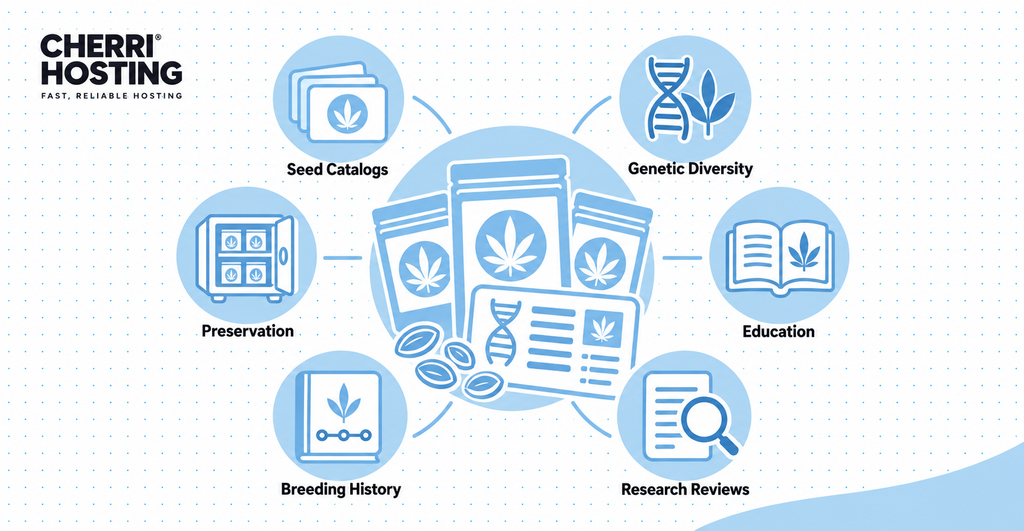
The top 10 cannabis seed banks reviewed here represent different approaches to breeding, genetic preservation, and distribution. Companies such as Seedsman and Seed Supreme emphasize broad catalogs, while Sensi Seeds highlights breeding heritage. The table summarizes their distinguishing characteristics without assigning unsupported quality rankings.
| Cannabis Seed Bank | Main Focus | Key Distinction |
| Seed Supreme | Broad seed catalog | Multiple seed classifications |
| Homegrown Cannabis Co. | Education and genetics | Beginner-focused information |
| ILGM | Seed distribution and education | Accessible learning resources |
| Seedsman | Multiple breeder catalogs | Variety of genetic sources |
| WeedSeedsExpress | Seed distribution | International market focus |
| Royal Queen Seeds | Modern cannabis genetics | F1 hybrid development |
| Sensi Seeds | Genetic preservation | Established breeding history |
| Dutch Passion | Seed breeding | Feminized seed development |
| Green House Seed Co. | Cannabis genetics | Historical breeding awards |
| Barney’s Farm | Hybrid development | Established cultivar heritage |
Company history offers context, but it cannot establish the quality of every seed batch. For example, Sensi Seeds reports operating since 1985, while Dutch Passion traces its establishment to 1987. The following profiles explain each company’s background, documented strengths, and important research limitations.
Top 10 Cannabis Seed Banks Reviewed
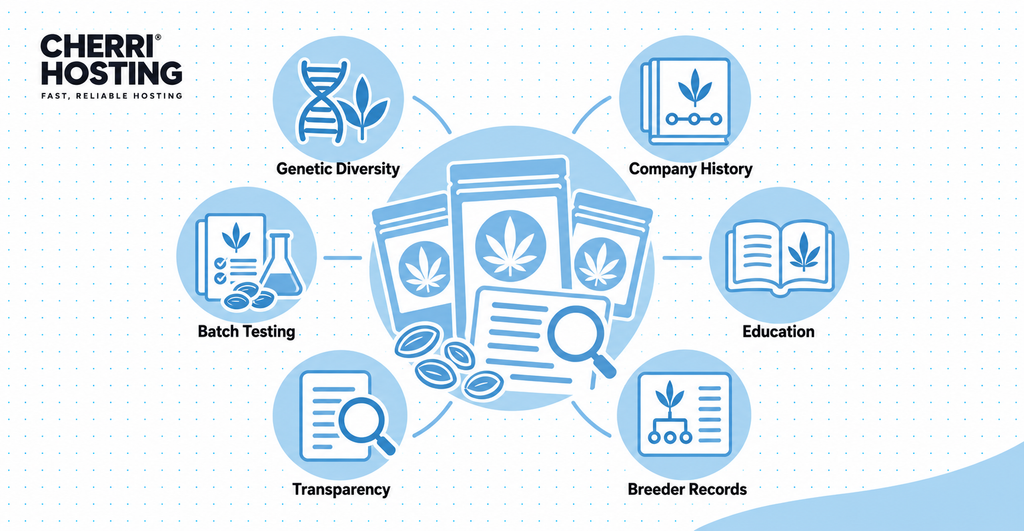
These 10 cannabis seed banks differ in genetic specialization, company history, educational content, and transparency. Our review focuses on documented information rather than unverified performance promises. The numbered entries organize the comparison and do not represent laboratory-tested quality rankings.
1. Seed Supreme
Seed Supreme is a cannabis seed distributor known for its extensive catalog and multiple seed classifications. Its offerings include feminized, regular, and autoflowering genetics. The company appears in published comparisons emphasizing selection, customer assistance, and germination guarantees.
Cannabis.net’s 2024 review identified catalog variety and customer support as prominent characteristics. However, its editorial ratings should not be treated as independent laboratory findings. Published guarantees also cannot establish consistent genetic performance across every seed batch.
Key distinction: Broad catalog coverage and publicly described customer policies.
2. Homegrown Cannabis Co.
Homegrown Cannabis Co. combines cannabis seed distribution with educational information about genetics and cultivation. Its published content explains plant characteristics, seed classifications, and cannabis terminology. Cannabis.net also highlights educational assistance as an important part of its company profile.
The company promotes germination-related guarantees and customer support. However, guarantee terms should be reviewed separately from claims about biological seed quality. Independent batch testing would provide stronger evidence of viability and genetic consistency.
Key distinction: Beginner-focused educational resources alongside its seed catalog.
3. ILGM (I Love Growing Marijuana)
ILGM is a cannabis seed company associated with founder Robert Bergman and educational content for beginners. Cannabis.net reports that the company began in 2012. Its published information covers seed terminology, genetics, and general cannabis education.
The catalog includes classifications such as feminized and autoflowering genetics. However, a broad selection cannot establish the authenticity of every listed genetic line. Independent testing and documented breeder information offer more meaningful evidence than catalog size alone.
Key distinction: Accessible information about cannabis terminology and seed classifications.
4. Seedsman
Seedsman is a cannabis seed distributor associated with genetics from multiple breeding companies. Its catalog represents different breeders rather than one exclusively developed genetic collection. This distinction matters when evaluating individual seed descriptions and breeder attribution.
Seed quality may differ between genetic lines supplied by separate producers. Documentation should identify the breeder, seed classification, and relevant genetic information. A distributor’s overall reputation cannot verify every product’s genetic stability or viability.
Key distinction: A multi-breeder catalog with diverse genetic sources.
5. WeedSeedsExpress
WeedSeedsExpress is a cannabis seed distributor featured in published comparisons for its international market presence. Cannabis.net’s 2024 review emphasized international shipping as a distinguishing characteristic. Its catalog also includes feminized and autoflowering seed categories.
Distribution information and genetic quality represent separate evaluation questions. Shipping claims do not establish seed viability, and seed descriptions do not replace laboratory evidence. Regional availability and applicable regulations also require independent verification.
Key distinction: International distribution focus and multiple cannabis seed categories.
6. Royal Queen Seeds
Royal Queen Seeds is a European cannabis seed company associated with modern genetics and F1 hybrids. An F1 hybrid represents the first generation produced from two selected parental lines. The company also publishes information about feminized and autoflowering genetic categories.
Its documented history describes development from an Amsterdam-based project into an international brand. The company’s F1 program provides an example of how breeding terminology appears in commercial catalogs. However, claims about genetic uniformity should be supported by specific testing evidence.
Key distinction: Published information about hybrid development and genetic classifications.
7. Sensi Seeds
Sensi Seeds is an Amsterdam-based cannabis seed company recognized for its breeding history and genetic preservation work. Founder Ben Dronkers established the company in 1985, according to its official history. That represents more than 40 years of company history as of 2026.
Its breeding heritage includes established cultivars such as Northern Lights, Skunk #1, and Jack Herer. The company describes its role in maintaining and developing cannabis genetic lines. However, historical importance cannot verify the quality of every currently distributed seed batch.
Key distinction: Long-documented breeding history and genetic conservation.
8. Dutch Passion
Dutch Passion is a Dutch cannabis seed company associated with feminized seed development and established breeding history. The company traces its formal establishment to 1987. Founder Henk van Dalen’s earlier genetic work forms part of its historical background.
Dutch Passion has documented its involvement in developing feminized cannabis seeds. Its catalog contains genetic categories such as regular, feminized, and autoflowering lines. Historical achievements establish company background but do not prove present-day seed performance.
Key distinction: Established breeding heritage and documented feminized seed development.
9. Green House Seed Co.
Green House Seed Co. is an Amsterdam-based cannabis breeding company associated with genetic development and historical awards. Its official website reports 40 High Times Cannabis Cup awards and 17 Highlife Cup awards. These figures describe company-reported recognition rather than current quality test results.
The company documents breeding activity and genetic collection through its published history. Its catalog includes established genetic families such as Haze and White Widow. However, individual award records cannot establish the viability or genetic stability of every commercial seed.
Key distinction: Documented breeding history and historical industry recognition.
10. Barney’s Farm
Barney’s Farm is an Amsterdam-associated cannabis seed company with a history of breeding and genetic development. Its company background discusses genetic exploration and cultivar development dating to the 1980s. The brand is associated with established and modern hybrid genetic lines.
Its documented heritage helps explain the company’s place within cannabis breeding history. However, established cultivar names do not automatically establish genetic identity across commercial seed versions. Independent documentation remains important when evaluating lineage and consistency.
Key distinction: Historical breeding background and hybrid genetics development.
How We Evaluate Cannabis Seed Banks
We evaluate cannabis seed banks using five criteria: reputation, genetic documentation, seed quality, customer feedback, and transparency. Each criterion addresses a different part of company credibility. This approach avoids treating popularity or advertising claims as proof of performance.
Company reputation includes documented history, ownership information, and publicly available business records. Genetic documentation concerns breeder attribution, parental lineage, and seed classifications. Seed quality involves viability information, testing methods, and evidence supporting product claims.
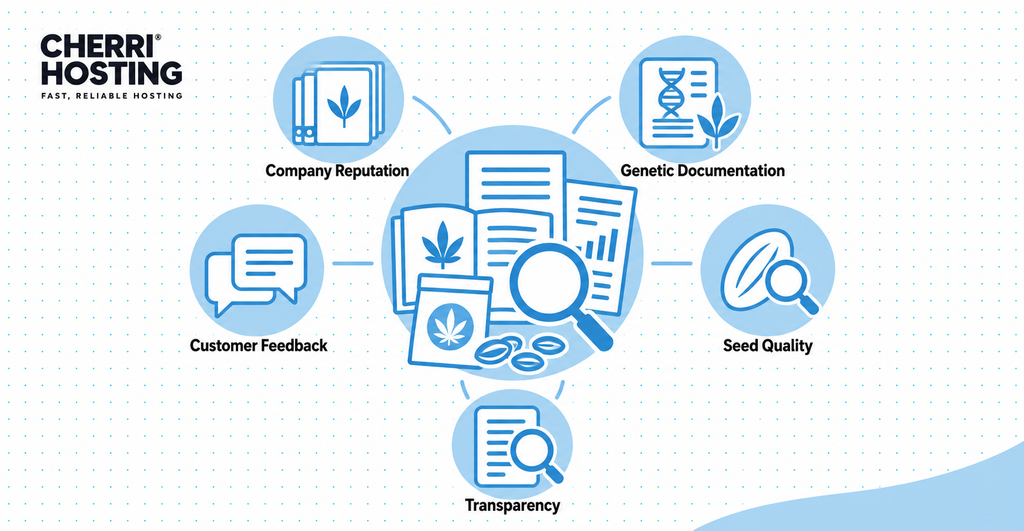
Customer feedback can reveal recurring concerns about communication, product information, and support. However, anonymous testimonials and unverified ratings cannot establish consistent biological quality. Transparency means clearly explaining company policies, research limitations, and supporting evidence.
This article uses published company information, third-party comparisons, and available technical references. No original seed purchases, laboratory examinations, or standardized germination trials were conducted for this review. Therefore, the ten entries are research profiles rather than a statistically validated performance ranking.
Understanding Cannabis Seed Types and Genetics
Cannabis seed types describe biological characteristics, while genetics explains inherited traits and relationships between breeding lines. Three important classifications are regular, feminized, and autoflowering. Understanding these terms helps readers interpret product descriptions accurately.
Feminized, Regular, and Autoflowering Seeds
Regular cannabis seeds generally produce male or female plants, depending on inherited sex characteristics. An approximately 50:50 sex ratio is expected under typical genetic segregation. Actual outcomes can vary between populations and environmental conditions.
Feminized cannabis seeds are produced using breeding methods intended to generate predominantly female plants. Feminization describes expected sex expression rather than a particular genetic lineage. It does not independently establish seed viability or cultivar authenticity.
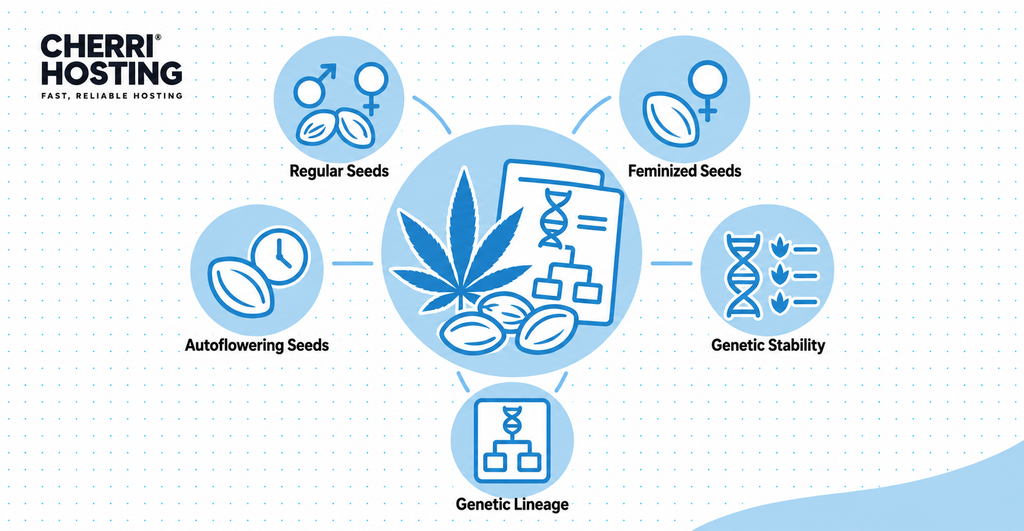
Autoflowering cannabis seeds contain genetic characteristics associated with age-dependent flowering. This differs from photoperiod flowering, which responds to changes in daylight duration. Autoflowering seeds can also be feminized because the classifications describe different characteristics.
Why Genetic Stability and Lineage Matter
Genetic stability describes how consistently inherited characteristics appear within a particular breeding line. Examples include plant structure, flowering behavior, and chemical composition. Greater consistency requires appropriate breeding evidence rather than familiar cultivar names.
Genetic lineage identifies documented ancestry, including parental lines and breeding generations. F1 describes the first filial generation produced through a cross between selected parents. However, the F1 label alone does not prove that a commercial genetic line is uniform.
The distinction between breeder, distributor, and cultivar also matters. A breeder develops genetic lines, while a distributor may supply material developed by other companies. A cultivar identifies a plant variety rather than automatically identifying a separate seed bank business.
What Makes a Cannabis Seed Bank Reputable?
A reputable cannabis seed bank demonstrates credibility through documented history, transparent policies, reliable information, and verifiable customer feedback. These indicators help explain why company reputation should involve more than advertising. Five areas provide useful evidence for assessing published claims.
Company history helps establish how long an organization has operated. For example, Sensi Seeds reports its establishment in 1985, while Dutch Passion dates its founding to 1987. However, company age alone cannot establish superior genetic quality.
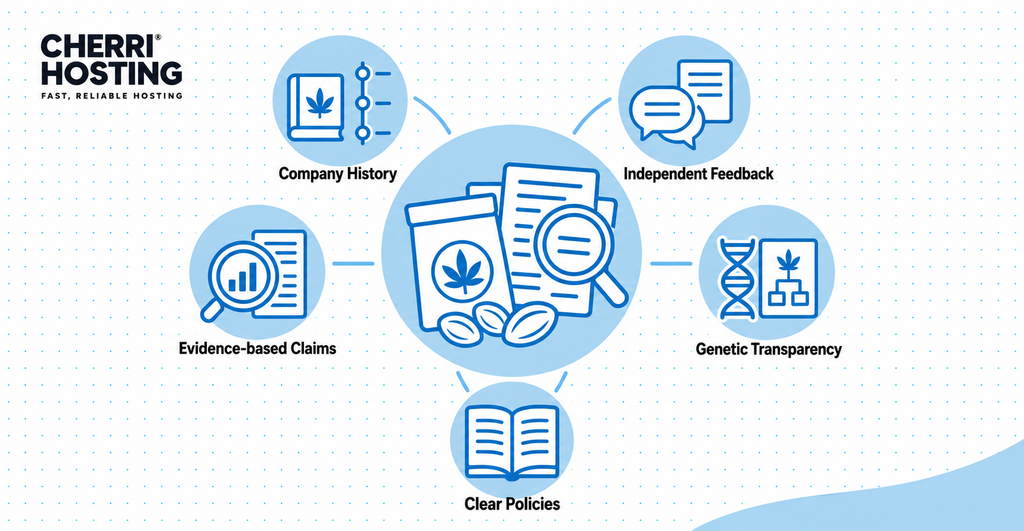
Independent customer feedback can reveal recurring concerns about communication, product descriptions, or support. Reviews become more informative when their sources, dates, and circumstances are available. Promotional testimonials offer less reliable evidence when their authenticity cannot be established.
Genetic transparency concerns documented breeding origins and accurate product terminology. Clear business policies explain guarantees, complaint procedures, and customer responsibilities. Honest quality claims distinguish independently verified evidence from company-reported performance.
Warning signs include unexplained ratings, vague breeder attribution, and unsupported promises. A ranking without an identifiable research method provides limited evidence of comparative quality. Credibility depends on transparent information rather than popularity alone.
Cannabis Seed Quality, Viability, and Guarantees
Cannabis seed quality involves viability, genetic consistency, storage conditions, and reliable testing evidence. Viability describes whether a seed remains alive and capable of germination. Genetic quality concerns inherited characteristics and whether those characteristics match documented claims.
Germination rates measure the proportion of tested seeds producing normal seedlings under specified conditions. For example, 90 successful seedlings from 100 tested seeds represent a 90% germination rate. Results depend on the testing procedure, sample characteristics, and seed condition.
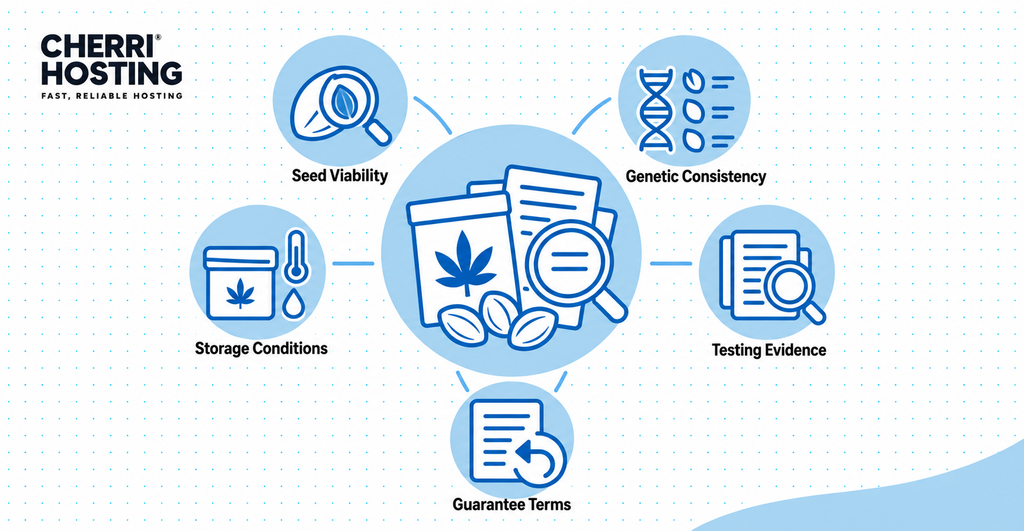
The International Seed Testing Association maintains standardized seed-testing rules. Its 2026 rules contain 19 sections covering subjects such as sampling and quality assessment. However, the existence of these standards does not prove any reviewed company followed them.
Storage conditions also influence viability over time. Temperature, moisture, and storage duration can affect seed deterioration. These factors should be considered separately from the genetic identity of the seed.
Germination guarantees are commercial policies, not independent scientific certifications. A company may promise replacement under specified circumstances without conducting publicly documented laboratory testing. Reliable evaluation requires distinguishing guarantee terms from actual test results and reported sample sizes.
Cannabis Seed Prices and Value Explained
Cannabis seed prices reflect genetic development, breeder reputation, production costs, and commercial positioning. Seed classifications such as feminized, regular, and autoflowering may also influence pricing. However, price cannot independently prove authenticity, viability, or genetic consistency.
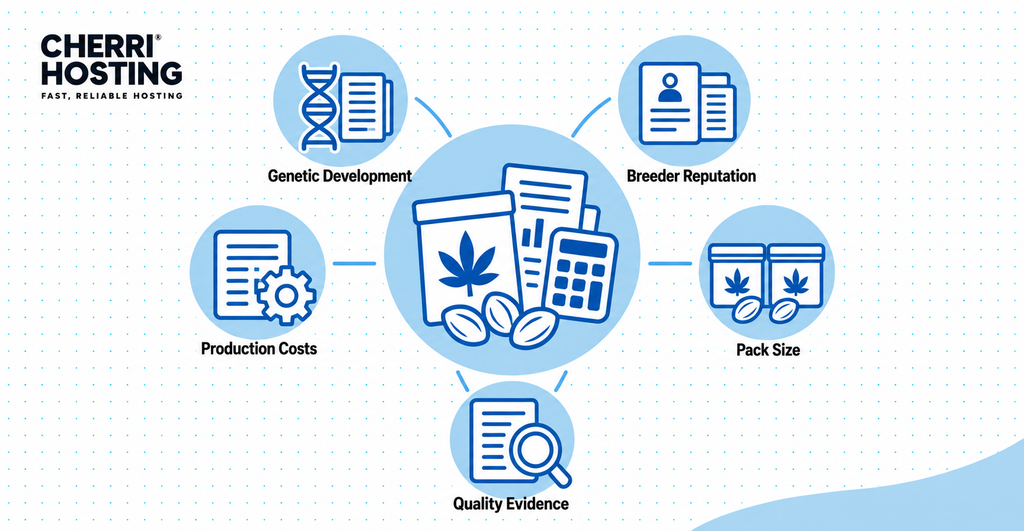
A hypothetical 10-seed pack costing $50 equals $5 per seed. A second 10-seed pack costing $100 equals $10 per seed. This comparison demonstrates price differences without claiming that the higher-priced product performs better.
Genetic documentation provides more meaningful context than price alone. Information about breeder attribution, lineage, and quality testing helps explain what a product claim represents. Current price comparisons also require equivalent pack sizes and clearly recorded dates.
Higher prices do not automatically establish superior cannabis genetics. Likewise, a lower price does not independently indicate poor seed quality. Both conclusions require supporting evidence rather than assumptions.
Are Cannabis Seeds Legal?
Cannabis seed legality depends on national law, regional regulations, seed classification, and the intended activity. Possession, distribution, importation, and cultivation can be governed by different legal requirements. Permission for one activity does not automatically authorize the others.
In the United States, the federal hemp definition historically used a 0.3% delta-9 THC threshold. Congressional legislation enacted in November 2025 changes the definition to address total THC. The new federal definition is scheduled to take effect on November 12, 2026.
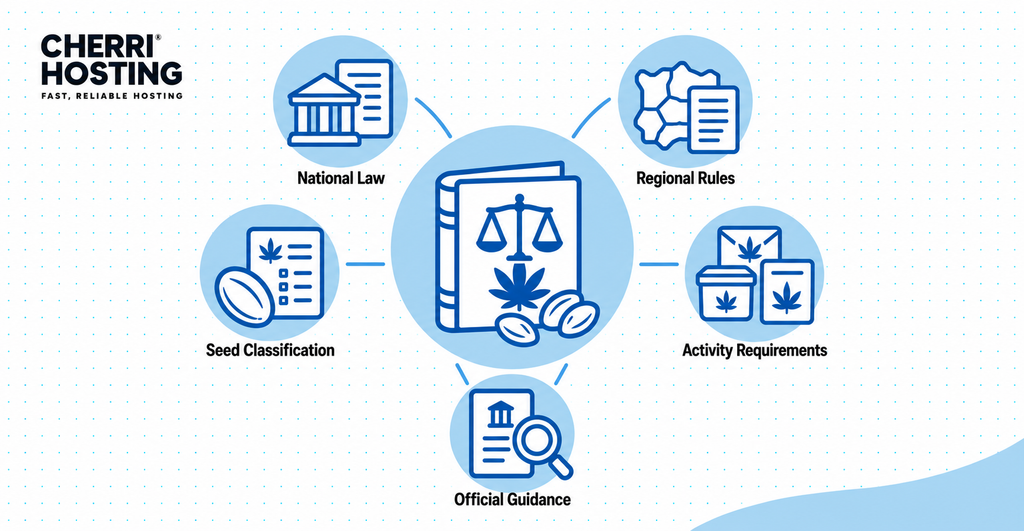
State-level requirements can differ from federal classification. For example, California has a regulated adult-use cannabis framework, while Idaho maintains substantially stricter rules. Readers should verify applicable laws rather than assuming one national rule covers every activity.
International requirements also differ between jurisdictions such as Canada, Germany, and the United Kingdom. Seed importation may involve agricultural controls alongside drug-related legislation. Official government guidance is more reliable than general legal claims appearing in commercial listings.
Cannabis seed possession and cannabis cultivation are separate legal questions. Legality should be assessed using current regulations for the relevant location. Historical explanations may become outdated when statutory definitions change.
Frequently Asked Questions
What Is the Difference Between a Seed Bank and a Breeder?
A cannabis breeder develops genetic lines, while a seed bank may preserve, distribute, or produce seeds. Some companies perform both activities within the same business. Others distribute products originating from several independent breeders.
How Can You Tell Whether a Cannabis Seed Bank Is Legitimate?
Legitimacy can be assessed through verifiable company information, transparent policies, and consistent public records. Useful evidence includes business registration, documented history, and clearly explained product information. Positive reviews alone cannot establish legal compliance or scientific quality.
Are Online Cannabis Seed Bank Reviews Reliable?
Online reviews provide useful context, but their reliability depends on source quality and verification. Anonymous testimonials may omit relevant information about product condition or customer circumstances. Independent evidence is especially important when websites publish numerical ratings without explaining their methods.
Does a Higher Germination Rate Mean Better Genetics?
No, a higher germination rate measures seed performance under testing conditions, not overall genetic superiority. Viability and genetic consistency represent different biological characteristics. A successful germination test cannot independently confirm documented ancestry or cultivar identity.
Why Do Different Websites Rank Cannabis Seed Banks Differently?
Rankings differ because publishers may use different criteria, evidence sources, and evaluation methods. One publisher may emphasize company history, while another focuses on customer feedback. Numerical rankings become more meaningful when their underlying methodology is explained.
Final Thoughts on the Top 10 Cannabis Seed Banks
The top 10 cannabis seed banks reviewed here represent different strengths in breeding history, genetics, education, and distribution. Companies such as Sensi Seeds and Dutch Passion have established historical records. Others, including Seedsman and ILGM, emphasize different aspects of seed distribution and information.
No single company can be declared universally superior without comparable evidence. Reputation, transparent genetic documentation, and independently supported quality claims provide a stronger basis for evaluation. Readers should also distinguish breeding achievements from present-day biological performance.
Ultimately, trustworthy comparisons require accurate terminology, credible sources, and clearly explained limitations. Commercial guarantees should not be confused with laboratory testing, and rankings should not replace verified evidence. Understanding these differences makes cannabis seed bank reviews more useful and reliable.